DERECHO PROCESAL PENAL (SÁNCHEZ MELGAR, JULIÁN) (España)




 Este libro se centra en el desarrollo de ciertas estructuras en la historia de España, estructuras que se relacionan con la actividad económica y la vida política. Empieza con cuatro ensayos que ofrecen diferentes perspectivas sobre el lugar de la España peninsular dentro del mundo más amplio de Europa y América, Vienen a continuación tres ensayos sobre los problemas de la construcción de una economía integrada en la España peninsular, problemas que hemos de entender si queremos captar el impacto del imperio español sobre la propia España. Los dos últimos ensayos vuelven sobre la interrelación entre las realidades económicas y la vida política como capital, Madrid fue un eslabón entre el mundo exterior de Europa y América y el mundo interior de Castilla. Como sugiere el último ensayo, la pérdida del imperio cambió el mundo interior de España de un modo que determinó la estructura de la historia contemporánea de España. El libro termina con un análisis de la interacción entre el cambio económico, la reforma política y la evolución social en el siglo XIX. Las conclusiones no son más que hipótesis de trabajo destinadas a poner en cuestión opiniones aceptadas.. Es de esperar que muevan a otros historiadores a quejarse, protestar, discutir y, sobre todo verificar tales hipótesis con nuevas investigaciones.




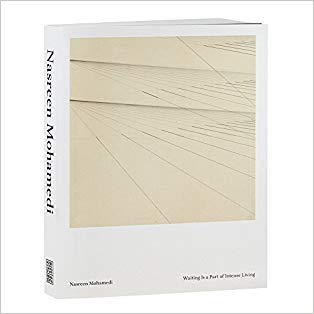 Catalogue of exhibition in a Reina Sofía Museum, (september 23, 2015-january, 15, 2016. Nasreen Mohamedi (Karachi, 1937-Baroda, 1990) was one of the first Indian artists to embrace abstraction, moving away from the more conventional doctrines of Indian modern art in the early decades of the 20th century. She chose non-figuration, an artistic practice marginalised at that time by independent India, which was essentially dominated by an anthropomorphous aesthetic and academic realism determined by art schools from the colonial period. Her artistic career, defined by the rigours of self-discipline and self-control, leads us towards a personal vision articulated around a frugal aesthetic and the use of simple mediums, where the mathematical, the metaphysical, the mystical were adopted in her search for a subjective and immaterial world.The exhibition, organised by the Museo Nacional Centro de Arte Reina Sofía and The Metropolitan Museum of Art, New York, in collaboration with the Kiran Nadar Museum of Art, New Delhi, displays her work combining thought and action in the intersections between her life and her art. The show features drawings, photographs, paintings and collages, with a focus on Mohamedi¿s work throughout the 1970s.
 En un único volumen se recogen y estudian todas aquellas cuestiones de ámbito mercantil, fiscal, laboral y seguridad social, que son de aplicación y deben tenerse en cuenta en el momento de crear una nueva sociedad y su posterior funcionamiento.