JOHN BROWN’S WAR AGAINST SLAVERY (Estudios generales)



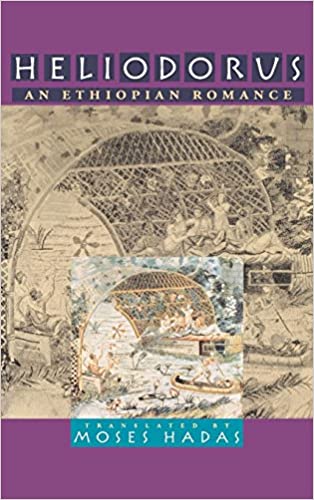 The Romance novel didn't begin with Kathleen Woodiwiss or even with the Bronte sisters. By the time Heliodorus wrote his Aethiopica--or Ethiopian Romance--in the third century, the genre was already impressively developed. Heliodorus launches his tale of love and the quirks of fate with a bizarre scene of blood, bodies, and booty on an Egyptian beach viewed through the eyes of a band of mystified pirates. The central love-struck characters are Charicles, the beautiful daughter of the Ethiopian queen, and Theagenes, a Thessalian aristocrat. The story unfolds with all the twists and devices any writer would employ today, with the added attractions of dreams, oracles, and exotic locales in the ancient Mediterranean and Africa. Hadas's was the first modern English-language translation of this story, which was first translated into English in 1587 and was a favorite among the Elizabethans. His version of this earliest extant Greek novel remains accessible and appealing. Moses Hadas (1900-1966) was Jay Professor of Greek at Columbia University. Well known for his translations of and interpretive works about classical literature, he was also the author of general histories of Greek and Latin literatures and editor of the Modern Library editions of Tacitus, Cicero, the Greek poets, and Caesar.

 Este estudio sobre la relación entre el reconocimiento, la independencia y la autodeterminación, muestra que la autodeterminación continúa siendo importante más allá de la descolonización europea y plantea cómo y por qué las cuestiones de autodeterminación no resueltas tienen el potencial de convertirse en violentas. Basándose en la investigación sobre si el Tribunal Internacional de Justicia (TIJ), como principal órgano judicial de las Naciones Unidas, podría resolver satisfactoriamente las cuestiones de autodeterminación mediante la aplicación de análisis legales y de principios de derecho internacional, Andew Coleman se pregunta si el TIJ es el fórum adecuado para estas cuestiones, y qué cambios serían necesarios para proveer un medio efectivo para el 'nacimiento' pacífico de nuevos Estados.