TOT DALÍ. VIDA I OBRA DEL PERSONATGE MÉS GENIAL I ESPECTACULAR DEL SE (Ficción moderna y contemporanea)







 Diego está bueno, jodido. Es un aspirante a escritor y baterista no muy bueno que, a pesar de ser licenciado universitario, trabaja como mozo de almacén en una mega tienda de bricolaje. A sus 38 años se siente frustrado: tiene pocos amigos, está harto del trabajo, su novia le ha dejado y su carrera de escritor es un fracaso. Pero, sobre todo, está harto de sí mismo por su comportamiento y actitud ante la vida, por ser un «perpetuo insatisfecho», que le ha llevado precisamente a esa situación. De modo que decide dar un vuelco a su vida y «cambiar». Pero, por supuesto, nada sale como él esperaba.

 Entre montes y calores historia acontecimientos verosímiles a mitad de camino entre un «relieve accidentado» y unos «calores cálidos»; acontecimientos protagonizados por personajes que se mueven en un «espacio real», «semireal» hasta ficticio donde el sentido de la memoria individual se vincula con el de la memoria colectiva cuyos «ángeles custodios» son Bomu, Mani y Mani Mani. Tres generaciones entrecruzadas por la mar de acontecimientos fantásticos «empapados» en una cierta verosimilitud y en una cierta veracidad por lo que el espejo sagrado constituye un elemento unificador de lugares tan dispersos en el espacio como en el tiempo entre Bake y Dindefelo, entre Bake y Banda, entre Bake y Kaolack, entre Bake y Dakar. Entre montes y calores, el hoy de Bake se mira en el ayer de Bake grabado en la memoria colectiva y se eterniza por los «guardia-memorias» de la familia de Mani Mani. Lo sobrenatural, lo mítico, lo supersticioso y lo verosímil fluctúan Entre montes y calores donde uno pone en tela de juicio temáticas en torno a la interpretación del sentido y el valor de lo que es escribir, de la «democracia», de las TICs, de los conceptos del tiempo y del espacio, etc.


 This work has been selected by scholars as being culturally important and is part of the knowledge base of civilization as we know it.This work is in the public domain in the United States of America, and possibly other nations. Within the United States, you may freely copy and distribute this work, as no entity (individual or corporate) has a copyright on the body of the work.Scholars believe, and we concur, that this work is important enough to be preserved, reproduced, and made generally available to the public. To ensure a quality reading experience, this work has been proofread and republished using a format that seamlessly blends the original graphical elements with text in an easy-to-read typeface.We appreciate your support of the preservation process, and thank you for being an important part of keeping this knowledge alive and relevant.
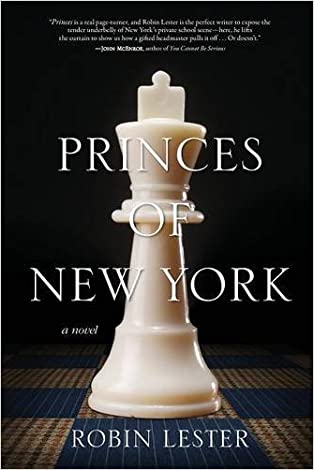 Tom West, the rumpled, young, headmaster of Christ Church School, loves his job on Manhattan’s Upper East Side, and the students and faculty love him right back. But when board member Robert Cattivo—a high-flying real estate magnate who worships Machiavelli and mentored Trump—threatens the integrity of Christ Church, the principled headmaster is thrown into the biggest challenge of his life. Will Cattivo succeed in corrupting Tom, as well as his treasured institution, selling trustee seats and admission slots to the highest bidder and kicking the headmaster to the curb? Must he abandon his integrity to keep his job and preserve the legendary school’s high standards? Aided by a beautiful Met curator and an ailing bishop, Tom goes up against a band of ruthless barbarians to save the soul of a legendary school—and in the process, he rediscovers his own humanity.Robin Lester, the former head of Trinity School in New York, also taught and headed schools in San Francisco, Chicago, and Minneapolis. His OpEds and articles have appeared in the New York Times, the Chicago Tribune, the Chicago Sun-Times, and The Dictionary of American Biography. STAGG’S UNIVERSITY, Lester’s cultural history of American college football, won the Book of the Year award from the North American Society for Sport History. Lester has a PhD. in history from the University of Chicago.PRINCES is a real page-turner, and Robin Lester is the perfect writer to expose the tender underbelly of New York's private school scene--here, he lifts the curtain to show us how a gifted headmaster pulls it off . . . Or doesn't. John McEnroe Author of You Cannot Be SeriousHead of School Tom West is a hero for our times in this witty and sparklingly literate evocation of the way we live now. Peter Blauner, author of Slow Motion Riot and Slipping Into DarknessFiendishly clever, funny, entertaining, and often downright mischievous, Princes offers the compelling behind the scenes intrigue of a private school's headmaster ultimately going to the mat with the Machiavellian one-percenters of Manhattan. Julie Holland, MD author, Weekends At Bellevue: Nine Years on the Nightshift at the Psych ERPrinces is hilarious, cutting and utterly entertaining. This Machiavellian tale is told by a consummate insider and, in the style of Bonfire of the Vanities, will leave certain readers scrambling to discern what facts may lie beneath the fiction. Daphne Uviller, author, Super in the City and Hotel No TellPrinces is an engrossing, authentic story about an independent school in the complicated, exciting and exhilarating city of New York. Edes Gilbert, former head of the Spence School, New York; author, Alone Together
 La Piedad de Caro representa una crítica sobre los valores culturales y religiosos de la sociedad mexicana de fines del siglo XX y principios del XXI. En esta historia se involucran diferentes sectores sociales como la familia, la iglesia, el gobierno y al individuo mismo enfrentándose al dilema del ser espiritual y el interés personal. Caro es una mujer madura de clase media alta cuya vida se desarrolla en una sociedad ultra católica, donde los personajes manejan una doble moral. Ella tiene claro que el fin justifica los medios y por ello aprovecha bien su imagen social para lograr todo lo que se propone. Cada situación que enfrenta Caro la conduce por senderos impredecibles que en ocasiones la hacen feliz y otras veces le provocan sufrimiento, pero nunca la doblegan. Su ambición y su forma personal de vivir su religión crean una atmósfera caótica y diametralmente contrastante entre el amor a su familia y el odio generado por el deseo inminente de poseer todo cuanto ella quiere.