A TRADER’S FIRST BOOK ON COMMODITIES (GARNER, CARLEY)
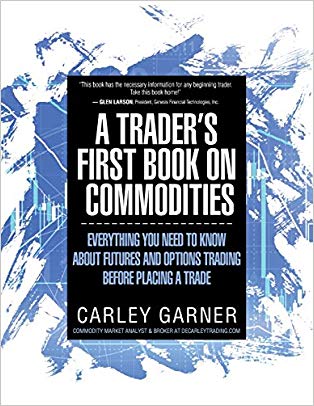 In their quest for trading commodities profitably, beginning traders spend a substantial amount of time studying market theory, various types of market analysis, and paper-trading in the futures and options markets. Yet, almost all of them fail to take the necessary steps to ensure their trading environment is conducive for the profits they seek. A Trader?s First Book on Commodities aims to fill the void in trading literature that overlooks the importance in making the right decisions before ever placing a commodity trade such as fully understanding market mechanics and logistics, choosing a proper trading platform, understanding order types, being aware of market data fees and policies, how to quote and calculate profit or loss in each of the commodity markets, preparing for margin calls, and the only magic in trading?humility. ? A Trader?s First Book on Commodities is guaranteed to shorten the learning curve for beginning traders while offering seasoned traders a new perspective on familiar topics. There is more to trading than computer-generated oscillators and trendlines; choosing the wrong trading platf
EFICIENCIA Y CONCENTRACIÓN DEL SISTEMA BANCARIO ESPAÑOL (MARAVALL, FERNANDO)
VENTA CRUZADA DE SERVICIOS FINANCIEROS, LA (RITTER, D. S.)

PRÉSTAMOS Y CRÉDITOS CON GARANTÍA DE VALORES (MORENO DE LA SANTA GARCÍA, ENRIQUE)

VALORACIÓN FINANCIERA (PABLO LÓPEZ, ANDRÉS DE)

DIRECCIÓN FINANCIERA APLICADA . INVERSIONES (RODRÍGUEZ SANDIÁS, ALFONSO)
FINANZAS PARA UNIVERSITARIOS (MORALES-ARCE MACÍAS, RAFAEL)
 Es una obra que recoge cuestiones básicas que afectan a la actividad financiera en el contexto actual. Está dirigida al universitario que se inicia en el conocimiento de la función financiera. Incluye un CD con información complementaria de los temas que se abordan en el manual así como un formulario, un glosario de términos y tablas financiero-estadísticas.
HISTORIA DE LAS CAJAS DE AHORROS, ORIGEN Y EVOLUCIÓN (CASARES MARCOS, ANA BELÉN)

ARE CAPITAL BUFFERS PRO-CYCLICAL? EVIDENCE FROM SPANISH PANEL DATA (AYUSO HUERTAS, JUAN/PÉREZ CID, DANIEL/SAURINA SALAS, JESÚS)

CREDIT GROWTH . PROBLEM LOANS AND CREDIT RISK PROVISIONING IN SPAIN (FERNÁNDEZ DE LIS, SANTIAGO/MARTÍNEZ PAGÉS, JORGE/SAURINA SALAS, JESÚS)

HISTORIA DE LA CAJA DE AHORROS Y MONTE DE PIEDAD DE MADRID (TITOS MARTÍNEZ, MANUEL / LÓPEZ YEPES, JOSÉ)
LA EMPRESA ANTE EL EURO (GONZÁLEZ DE FRUTOS, UBALDO)
EMPLEGU, INTERES ETA DIRULARI BURUTKO TEORIA ONOKORRA (KEYNES, JOHN MAYNARD / BUSTURIA, KARMELO)

MANUAL DE INSTRUMENTOS DERIVADOS . MÁS DE TRES DÉCADAS DE BLACK-SCHOLES (KNOP MUSZYNSKI, ROBERTO)
EL ARTE DE ESPECULAR . LAS TÉCNICAS QUE MEJOR FUNCIONAN (CAVA ROMERO, JOSÉ LUIS)
 El libro va dirigido a todos las personas que quieran elaborar un sistema de especulación sencillo, o al menos aplicar técnicas y trucos muy sencillos que les permitan aprovecharse de las ocasiones que ofrezcan los mercados. Está pensado para que cualquier persona que quiera especular pueda disponer desde un sencillo truco hasta un sistema de especulación. El autor ha tratado de explicar y aplicar las técnicas de la manera más sencilla, por lo que se ha valido de representaciones idealizadas y de gráficos reales. El libro tiene unas 180 figuras y cada concepto va explicado con ejemplos reales. Cada técnica, cada truco es explicado de forma detallada a lo largo de las 479 páginas. Las herramientas necesarias para aplicar las técnicas que se explican en este libro van desde un simple calendario hasta un ordenador. Estamos ante lo que parece un libro de texto, el de la asignatura: #Así se especula#. En este libro se cuentan en detalle y con ejemplos reales una gran cantidad de sencillas técnicas de especulación, que funcionan muy bien y que le permitirán operar con confianza.