LA NOVELA ESPAÑOLA ENTRE 1936 Y 1980 (MARTÍNEZ CACHERO, JOSÉ MARÍA) (Literatura: historia y crítica)





 Aunque nacida en diferentes países, la literatura tiene diversos denominadores comunes que, en definitiva, la hacen universal. Pero esa universalidad es obra de mutuos influjos y de interrelaciones dispares. Compararlas es el objeto de esta nueva disciplina, la literatura comparada, de la que este libro colectivo es introducción teórica e interesante muestrario de casos ejemplares.
 This work has been selected by scholars as being culturally important and is part of the knowledge base of civilization as we know it.This work is in the public domain in the United States of America, and possibly other nations. Within the United States, you may freely copy and distribute this work, as no entity (individual or corporate) has a copyright on the body of the work.Scholars believe, and we concur, that this work is important enough to be preserved, reproduced, and made generally available to the public. To ensure a quality reading experience, this work has been proofread and republished using a format that seamlessly blends the original graphical elements with text in an easy-to-read typeface.We appreciate your support of the preservation process, and thank you for being an important part of keeping this knowledge alive and relevant.

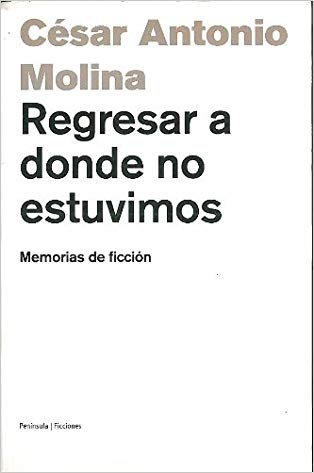 Entre la realidad y la ficción, entre lo vivido y lo soñado, entre la memoria y la vida, entre el recuerdo y el olvido, esta nueva entrega del singularísimo y no menos ambicioso proyecto literario que Cesar Antonio Molina empezó con Vivir sin ser visto (Ediciones Península, 2000) confirma el extraordinario talento del autor para estirar y transgredir los géneros canónicos de la literatura. En estas páginas, que tienen tanto de narrativa breve como de dietario, asistimos a la creación de un texto híbrido, unas memorias de ficción, que rinde cuentas sólo a la literatura. En él, las lecturas y las vivencias acumuladas a lo largo de una vida pletórica de presencias reales y relatos soñados suman una novela en marcha que se imanta en el lector un extraño y poderoso magnetismo del que es muy difícil sustraerse.
