LEGENDARY ISLANDS OF THE ATLANTIC
 This work has been selected by scholars as being culturally important and is part of the knowledge base of civilization as we know it.This work is in the public domain in the United States of America, and possibly other nations. Within the United States, you may freely copy and distribute this work, as no entity (individual or corporate) has a copyright on the body of the work.Scholars believe, and we concur, that this work is important enough to be preserved, reproduced, and made generally available to the public. To ensure a quality reading experience, this work has been proofread and republished using a format that seamlessly blends the original graphical elements with text in an easy-to-read typeface.We appreciate your support of the preservation process, and thank you for being an important part of keeping this knowledge alive and relevant.
CAMP MEETING MANUAL
 This work has been selected by scholars as being culturally important and is part of the knowledge base of civilization as we know it.This work is in the public domain in the United States of America, and possibly other nations. Within the United States, you may freely copy and distribute this work, as no entity (individual or corporate) has a copyright on the body of the work.Scholars believe, and we concur, that this work is important enough to be preserved, reproduced, and made generally available to the public. To ensure a quality reading experience, this work has been proofread and republished using a format that seamlessly blends the original graphical elements with text in an easy-to-read typeface.We appreciate your support of the preservation process, and thank you for being an important part of keeping this knowledge alive and relevant.
MEMOIRS OF THE WAR OF SECESSION
 This work has been selected by scholars as being culturally important and is part of the knowledge base of civilization as we know it.This work is in the public domain in the United States of America, and possibly other nations. Within the United States, you may freely copy and distribute this work, as no entity (individual or corporate) has a copyright on the body of the work.Scholars believe, and we concur, that this work is important enough to be preserved, reproduced, and made generally available to the public. To ensure a quality reading experience, this work has been proofread and republished using a format that seamlessly blends the original graphical elements with text in an easy-to-read typeface.We appreciate your support of the preservation process, and thank you for being an important part of keeping this knowledge alive and relevant.
THE LIFE OF JOHN ELIOT, THE APOSTLE OF THE INDIANS
 This work has been selected by scholars as being culturally important and is part of the knowledge base of civilization as we know it.This work is in the public domain in the United States of America, and possibly other nations. Within the United States, you may freely copy and distribute this work, as no entity (individual or corporate) has a copyright on the body of the work.Scholars believe, and we concur, that this work is important enough to be preserved, reproduced, and made generally available to the public. To ensure a quality reading experience, this work has been proofread and republished using a format that seamlessly blends the original graphical elements with text in an easy-to-read typeface.We appreciate your support of the preservation process, and thank you for being an important part of keeping this knowledge alive and relevant.
RAMEAU
 This work has been selected by scholars as being culturally important and is part of the knowledge base of civilization as we know it.This work is in the public domain in the United States of America, and possibly other nations. Within the United States, you may freely copy and distribute this work, as no entity (individual or corporate) has a copyright on the body of the work.Scholars believe, and we concur, that this work is important enough to be preserved, reproduced, and made generally available to the public. To ensure a quality reading experience, this work has been proofread and republished using a format that seamlessly blends the original graphical elements with text in an easy-to-read typeface.We appreciate your support of the preservation process, and thank you for being an important part of keeping this knowledge alive and relevant.
CRIMINAL CHRONOLOGY OF YORK CASTLE
 This work has been selected by scholars as being culturally important and is part of the knowledge base of civilization as we know it.This work is in the public domain in the United States of America, and possibly other nations. Within the United States, you may freely copy and distribute this work, as no entity (individual or corporate) has a copyright on the body of the work.Scholars believe, and we concur, that this work is important enough to be preserved, reproduced, and made generally available to the public. To ensure a quality reading experience, this work has been proofread and republished using a format that seamlessly blends the original graphical elements with text in an easy-to-read typeface.We appreciate your support of the preservation process, and thank you for being an important part of keeping this knowledge alive and relevant.
LIVES OF THE SIGNERS TO THE DECLARATION OF INDEPENDENCE
 This work has been selected by scholars as being culturally important and is part of the knowledge base of civilization as we know it.This work is in the public domain in the United States of America, and possibly other nations. Within the United States, you may freely copy and distribute this work, as no entity (individual or corporate) has a copyright on the body of the work.Scholars believe, and we concur, that this work is important enough to be preserved, reproduced, and made generally available to the public. To ensure a quality reading experience, this work has been proofread and republished using a format that seamlessly blends the original graphical elements with text in an easy-to-read typeface.We appreciate your support of the preservation process, and thank you for being an important part of keeping this knowledge alive and relevant.
SOUTH SUDANESE PAST NOTES & RECORDS
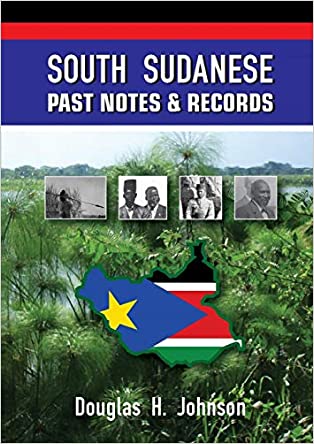 This collection of articles first appeared in The Pioneer weekly newspaper. Its founding editor, Atem Yaak Atem, invited me to contribute a weekly column of historical pieces that we decided to entitle “Past Notes and Records”. Back in the early 1980s when we were colleagues in the Regional Ministry of Culture and Information I had written a series of articles called “The Streets of Juba” for The Southern Sudan Magazine, which Atem had also founded. In those articles I gave brief biographies of some of the famous South Sudanese after whom some of Juba’s main streets had been named, and in many ways “Past Notes and Records” is a continuation and expansion of that earlier series. The pieces are intended to inform and to stimulate discussion and debate. The history of South Sudan has been a neglected subject. Much of the academic history about South Sudan has been written about foreign rulers rather than about South Sudanese communities and individuals. The history of South Sudan and South Sudanese was not included in the Sudan school syllabuses and is usually excluded from the general political histories of Sudan. There is still no reliable textbook on South Sudanese history for use in its schools. South Sudanese may know something about the past of their own communities, but few have had the opportunity to learn much about the broad history of their nation or how it fits into the wider region. The columns in this collection were originally addressed to a South Sudanese readership, and it is primarily for that readership, both at home and abroad, that they are republished here. This book is neither a comprehensive overview of South Sudan’s past, nor a record of the most important events or historic personalities. It is more like a selection of snapshots from a family album. The re-discovery of the past and the writing of history is a never-ending process. This booklet is only a beginning, a small offering to mark South Sudan’s achievement of independence. It is an open invitation to South Sudanese to research and write more about their own past. The author Dr Douglas H. Johnson is a scholar specialising in the history and affairs of Sudan and South Sudan. He is a Fellow of the Rift Valley Institute. Dr Johnson’s contacts with the two countries go back to more than four decades ago, beginning with time as a graduate student of prophecy among the Nuer people in the 19th and 20th centuries. His field work concentrated in central Upper Nile Province. In mid-1970s young Johnson joined the Regional Ministry of Culture and Information in Juba as assistant director for archives, a position in which he collected and classified documentary material from provincial capitals of the Southern Region. The files were later housed in Juba. Over the years, the historian has tirelessly worked with institutions and recently with the Government of South Sudan for the establishment of a national archive in Juba. Dr Douglas Johnson became a member of the Abyei Boundary Commission following the signing of the Comprehensive Peace Agreement that ended the Sudan’s armed conflict in 2005. He is an author and editor of several books on Sudan and South Sudan. Among these are The Root Causes of Sudan’s Civil Wars, Nuer Prophets: A History of from the Upper Nile in the Nineteenth and Twentieth Centuries, The Upper Nile province Handbook (editor). The last tome has been reissued as a paperback by the African World Books, the publisher of this volume.
SUPPLEMENTARY DESPATCHES AND MEMORANDA OF FIELD MARSHAL ARTHUR, DUKE OF WELLINGT
 This work has been selected by scholars as being culturally important and is part of the knowledge base of civilization as we know it.This work is in the public domain in the United States of America, and possibly other nations. Within the United States, you may freely copy and distribute this work, as no entity (individual or corporate) has a copyright on the body of the work.Scholars believe, and we concur, that this work is important enough to be preserved, reproduced, and made generally available to the public. To ensure a quality reading experience, this work has been proofread and republished using a format that seamlessly blends the original graphical elements with text in an easy-to-read typeface.We appreciate your support of the preservation process, and thank you for being an important part of keeping this knowledge alive and relevant.
THE ST. CLAIR PAPERS
 This work has been selected by scholars as being culturally important and is part of the knowledge base of civilization as we know it.This work is in the public domain in the United States of America, and possibly other nations. Within the United States, you may freely copy and distribute this work, as no entity (individual or corporate) has a copyright on the body of the work.Scholars believe, and we concur, that this work is important enough to be preserved, reproduced, and made generally available to the public. To ensure a quality reading experience, this work has been proofread and republished using a format that seamlessly blends the original graphical elements with text in an easy-to-read typeface.We appreciate your support of the preservation process, and thank you for being an important part of keeping this knowledge alive and relevant.
MEMORIES OF THE SOUTHERN STATES
 This work has been selected by scholars as being culturally important and is part of the knowledge base of civilization as we know it.This work is in the public domain in the United States of America, and possibly other nations. Within the United States, you may freely copy and distribute this work, as no entity (individual or corporate) has a copyright on the body of the work.Scholars believe, and we concur, that this work is important enough to be preserved, reproduced, and made generally available to the public. To ensure a quality reading experience, this work has been proofread and republished using a format that seamlessly blends the original graphical elements with text in an easy-to-read typeface.We appreciate your support of the preservation process, and thank you for being an important part of keeping this knowledge alive and relevant.
BURKE’S GENEALOGICAL AND HERALDIC HISTORY OF THE LANDED GENTRY; VOLUME 1
 This work has been selected by scholars as being culturally important and is part of the knowledge base of civilization as we know it.This work is in the public domain in the United States of America, and possibly other nations. Within the United States, you may freely copy and distribute this work, as no entity (individual or corporate) has a copyright on the body of the work.Scholars believe, and we concur, that this work is important enough to be preserved, reproduced, and made generally available to the public. To ensure a quality reading experience, this work has been proofread and republished using a format that seamlessly blends the original graphical elements with text in an easy-to-read typeface.We appreciate your support of the preservation process, and thank you for being an important part of keeping this knowledge alive and relevant.
NANCY HANKS
 This work has been selected by scholars as being culturally important and is part of the knowledge base of civilization as we know it.This work is in the public domain in the United States of America, and possibly other nations. Within the United States, you may freely copy and distribute this work, as no entity (individual or corporate) has a copyright on the body of the work.Scholars believe, and we concur, that this work is important enough to be preserved, reproduced, and made generally available to the public. To ensure a quality reading experience, this work has been proofread and republished using a format that seamlessly blends the original graphical elements with text in an easy-to-read typeface.We appreciate your support of the preservation process, and thank you for being an important part of keeping this knowledge alive and relevant.
THE LIFE AND TIMES OF THE REV. RICHARD BAXTER
 This work has been selected by scholars as being culturally important and is part of the knowledge base of civilization as we know it.This work is in the public domain in the United States of America, and possibly other nations. Within the United States, you may freely copy and distribute this work, as no entity (individual or corporate) has a copyright on the body of the work.Scholars believe, and we concur, that this work is important enough to be preserved, reproduced, and made generally available to the public. To ensure a quality reading experience, this work has been proofread and republished using a format that seamlessly blends the original graphical elements with text in an easy-to-read typeface.We appreciate your support of the preservation process, and thank you for being an important part of keeping this knowledge alive and relevant.
WHEN THERE IS NO WIND, ROW
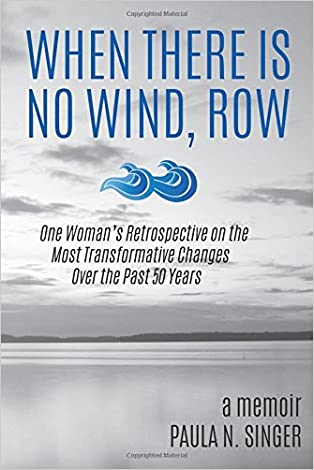 When There Is No Wind, Row tells the story about the remarkable career path Paula N. Singer traveled on her way to achieving her dream of becoming a lawyer. On that journey, social and cultural norms of the day forced her to make many detours - "tacking" in sailing terms - to other careers before continuing on her course to become a lawyer. During the 50-year span of her careers, Singer became an active participant in the computer revolution, the women's rights movement and the globalization of the economy. Social and cultural barriers were high when Singer began her journey in the 1960s. Women were supposed to become wives and mothers not lawyers. She faced financial barriers as well. Singer tells about growing up poor in the 1950s in Kennebunk, Maine. By the time she graduated from high school, she had lived in eight different places in town. She graduated first in her class, but scholarship awards and a student loan with savings from her summer jobs didn't cover her first-year college costs. She left for college not knowing how she would make it through financially after receiving a pep talk from her history teacher about working out her finances a semester at a time. She tells stories about how she did that while married and supporting her widowed mother by her junior year. With law school thwarted by the lack of financial aid for women for professional schools and with no financial aid awarded to her for graduate school, Singer began her journey with a job search in Boston in 1966. Singer's stories are a vivid reminder of how far women have progressed since then when want ads were segregated by "Male/Female," all the jobs with good career opportunities were under "Male" and companies refused to interview women for those jobs. Singer describes how she got interviews for good jobs through an employment agent who failed to disclose she was female. She arrived for her first interview, for executive assistant to the founder and president of a major company, only to be told, he "refuses to interview a woman." She had the second scheduled interview at an insurance company after a seven-hour wait. She finally landed a job as computer programmer even though she didn't know what a computer was. Her qualification for the job - she could play bridge! Singer describes learning how to program the UNIVAC III, an early business computer, with no computer science courses and the only debugging tool her deductive reasoning. Using stories and conversations, Singer takes us through her move back to Maine, birth of a daughter, and continuation of her computer career, overcoming barriers to become her employer's first female systems analyst. Divorced and supporting her daughter and mother, she left for law school when student aid for women became available after passage of Title IX of the Civil Rights Act in 1972. She married again while in law school and gave birth to another daughter after a move back to the Boston area. Singer describes what it was like for a lawyer with her unusual "credentials" - female, mid-30s, married, a mother, a public school education and a prior career - trying to break into the legal profession in Boston. With barriers too high to overcome, she tacked to a unique job with the consulting firm, Arthur D. Little, Inc. supporting the company's international personnel and projects at the outset of economic globalization. At age 40, she finally began practicing law, building up an international tax practice well before fax, email and the Internet. But her stories don't end there. At age 50, she parlayed her tax, immigration and computer experience to found and operate a successful tax software company with her husband. Singer includes her recollections of, and connections to, historical events from President Kennedy's assassination in 1963 to the Boston Marathon bombing in 2013, and, on a more positive note, the first US performance by the Beatles. Also included are profiles of many pioneering women.