100 KONTU ONDO EZAGUTZEKO ZIENTZIA
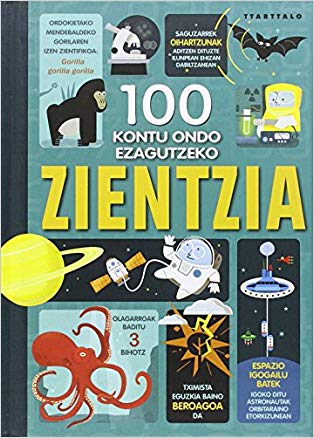 Zientzia mundua aztertzeko modua da, nola funtzionatzen duen jakiteko. Liburu interesgarri honi esker, gaztetxoek zientziaren mundu liluragarrian murgiltzeko aukera izango dute; Zer da Unibertsoa? Zenbat bihotz dituzte olagarroek? Nola laguntzen diete narbalek ozeanografoei? Zergatik da ezaguna Marie Curie zientzialaria? Eta Einstein? Zein da gogorragoa, altzairuzko haria ala armiarma-zeta? Zertarako erabiltzen da elektrizitate estatikoa?... Ezagutza liburu honek galdera horiei guztiei erantzuten die. Argibide zehatzek eta koloretako irudi ikusgarriek osatzen dute liburua.
5EP.(AND)CON.DEL MEDIO-NMPT 02 (PASTOR, ANDREA/RUIZ, FRANCISCO/VIERA, ANA)
 Cada unidad se estructura de la siguiente manera: - Página de entrada para despertar la motivación - Tratamiento de los contenidos - Actividades - Aprende a estudiar - Mundo abierto. Se incluye un cuaderno de contenidos clave y un atlas didáctico. Los contenidos son específicos para Andalucía.
3EP.(C.L)CON.DEL MEDIO-NPT (VALVERDE, JESÚS/VALBUENA, MERCEDES/PASTOR, ANDREA/RUIZ CASADO, FRANCISCO)
 Estructura de cada unidad: - Página de entrada para despertar la motivación - Tratamiento de los contenidos - Actividades - Aprende a estudiar - Con los pies en la Tierra. Contiene material específico para Castilla y León.
3EP.(AST)CON.DEL MEDIO-NPT (VILLA, JESÚS/PASTOR, ANDREA/RUIZ CASADO, FRANCISCO)
 Estructura de cada unidad: - Página de entrada para despertar la motivación - Tratamiento de los contenidos - Actividades - Aprende a estudiar - Con los pies en la Tierra. Contiene material específico para Asturias.
1º EP C. MEDIO-COMUNIDAD VALENCIANA TRAMPOLÍN 07 (VACAS, PILAR)
 El proyecto Trampolin se basa en tres pilares fundamentales para que la adquisición de las competencias básicas sean verdaderamente eficaz: - Desarrollo de habilidades lectoras para leer y comprender textos de diferentes tipologías - Mejora y mantenimiento de la atención para poder adquiriri conocimientos y para comprender los mensajes tanto orales como escritos. - Potenciación del razonamiento lógico como medio para interpretar y comprender mejor las situaciones del entorno y también como la mejor estrategia para encontrar soluciones
BESTIARUM CURRICULUM . MEDITACIONES SOBRE EL ACONTECIMIENTO (EN LA ACADEMIA) (BLESA ALEDO, BELÉN)
1EP.(C.V)CUAD.CON.DEL MEDIO-PD 04 (RUIZ RÓDENAS, JOSEFINA/NAVARRO FAUS, MARÍA VICTORIA)
 Cuaderno de ejercicios en los que se proponen actividades para que los niños y niñas del Primer Ciclo de Educación Primaria refuercen los conocimientos adquiridos acerca de los tres centros de interés contemplados en el Proyecto Duendes: - Me Descubro - Descubro a los demás - Descubro lo que me rodea Contenido adaptado a la comunidad autónoma valenciana.
NATURAL SCI 6 AND SB 2ND LEARN TOG (VV.AA.)
NATURAL SCI 5 AND SB 2ND LEARN TOG (VV.AA.)
NATURAL SCI 4 AND SB 2ND LEARN TOG (VV.AA.)
NATURAL SCI 3 AND SB 2ND LEARN TOG (VV.AA.)
NATURAL SCI 1 AND SB 2ND LEARN TOG (VV.AA.)

NATURAL SCIENCE. 5 PRIMARY. MÁS SAVIA. MADRID (PUEYO LOBERA, ISABEL / HIDALGO MORENO, ANTONIO JOSÉ / GONZÁLEZ, MONSERRAT / PEÑA PÉREZ, ALBERTO / NAVARRO ELBAL, ALBERTO / LÓPEZ, SERGIO)
 The MAS SAVIA Project for Natural Science takes advantage of different tools and methodologies to motivate the learning, understanding and application of the contents. The contents of each learning block are organized into three learning moments : Let's Get Started, Let's Understand and Let's use . Inserted between these areMake a Change (service-learning activities with many opportunities to work using co-operative strategies) in which both communicative and cognitive skills are put into practice. Many of the Let's Get Started and Let's Use sections take the form of experimental workshops. This general philosophy of promoting active learning is manifest in the finalMaking a Change task which integrates knowledge, skills and multiple intelligences. Natural Science takes the CLIL approach to making language and contents accessible with careful scaffolding of language and the visual summarizing of content. There are regular opportunities to review what has been learned. Attention to diversity is catered for by online testing which can give the teacher a clear and immediate evaluation of the class's performance by identifying students who may be having difficulties. Natural Science has been created in tandem with EPS: a new CLIL based English course for plurilingual primary schools which integrates closely with the Natural Science learning paths
NATURAL SCIENCE. 4. PRIMARY. MÁS SAVIA . ANDALUCÍA (BILINGUAL TEAM S.M)
 Savia Natural Science Learning through discovery by using the scientific method in the classroom. Each unit gives practical opportunities to experiment in order to provide meaningful learning.At SM we know that education stands for development. Savia means sap in Spanish, and, just like plant sap, education nourishes, develops and generates life, and it is in constant renovation. Education is the new sap that fuels the future.This isSavia: a global project designed for all educational stages underpinned by a solid model based on values education where everything revolves around the pupil and aims to improve their results by focusing on different learning rhythms and styles. The project emerges from our mission to service and help teachers, providing them with the ideal resources to perform their everyday tasks. Savia reflects our commitment to education through the flexible introduction of new methodologies and technologies that can efficiently improve the quality of education.
NATURAL SCIENCE. 2 PRIMARY. MAS SAVIA . ANDALUCÍA (GARÍN MUÑOZ, MERCEDES / CÁLIZ, SONIA / HIDALGO GARCÍA, JUAN MANUEL)
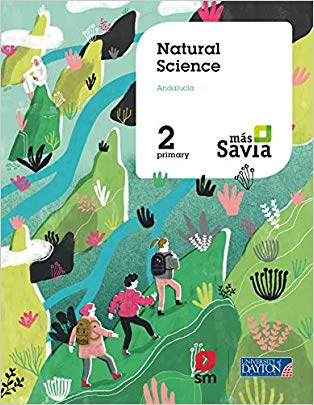 The MAS SAVIA Project for Natural Science takes advantage of different tools and methodologies to motivate the learning, understanding and application of the contents. The contents of each learning block are organized into three learning moments : Let's Get Started, Let's Understand and Let's use . Inserted between these areMake a Change (service-learning activities with many opportunities to work using co-operative strategies) in which both communicative and cognitive skills are put into practice. Many of the Let's Get Started and Let's Use sections take the form of experimental workshops. This general philosophy of promoting active learning is manifest in the finalMaking a Change task which integrates knowledge, skills and multiple intelligences. Natural Science takes the CLIL approach to making language and contents accessible with careful scaffolding of language and the visual summarizing of content. There are regular opportunities to review what has been learned. Attention to diversity is catered for by online testing which can give the teacher a clear and immediate evaluation of the class's performance by identifying students who may be having difficulties. Natural Science has been created in tandem with EPS: a new CLIL based English course for plurilingual primary schools which integrates closely with the Natural Science learning paths