HENRY SIDGWICK (SIDGWICK, ARTHUR/SIDGWICK, ELEANOR MILDRED)
 This work has been selected by scholars as being culturally important and is part of the knowledge base of civilization as we know it.This work is in the public domain in the United States of America, and possibly other nations. Within the United States, you may freely copy and distribute this work, as no entity (individual or corporate) has a copyright on the body of the work.Scholars believe, and we concur, that this work is important enough to be preserved, reproduced, and made generally available to the public. To ensure a quality reading experience, this work has been proofread and republished using a format that seamlessly blends the original graphical elements with text in an easy-to-read typeface.We appreciate your support of the preservation process, and thank you for being an important part of keeping this knowledge alive and relevant.
GREEK THINKERS (GOMPERZ, THEODOR)
 This work has been selected by scholars as being culturally important and is part of the knowledge base of civilization as we know it.This work is in the public domain in the United States of America, and possibly other nations. Within the United States, you may freely copy and distribute this work, as no entity (individual or corporate) has a copyright on the body of the work.Scholars believe, and we concur, that this work is important enough to be preserved, reproduced, and made generally available to the public. To ensure a quality reading experience, this work has been proofread and republished using a format that seamlessly blends the original graphical elements with text in an easy-to-read typeface.We appreciate your support of the preservation process, and thank you for being an important part of keeping this knowledge alive and relevant.
UNA ODISEA ALUCINANTE . LIBRO DIDÁCTICO SOBRE LA HISTORIA DE LA FILOSOFÍA Y SU CONTEXTO HISTÓRICO-CULTURAL EN LA GRECIA ANTIGUA (ROS, ANG)

LA FRAGILIDAD DE LOS SABIOS Y EL FIN DEL PENSAMIENTO (BERMEJO BARRERA, JOSÉ CARLOS)
 A lo largo de la historia occidental, se creyó en la existencia de un determinado tipo de personas que dedicaron su vida al cultivo desinteresado del saber, obteniendo a cambio de ello un prestigio especial. Las figuras de esos sabios fueron durante muchos siglos la garantía de que las sociedades occidentales podían lograr el acceso sin trabas a la verdad. Sin embargo dichos sabios, desde los filósofos griegos hasta los intelectuales de la Edad Moderna, pasando por generaciones y generaciones de clérigos, fueron en realidad unos seres enormemente frágiles, debido a su carencia de recursos económicos y a su dependencia de los poderes reales: eclesiásticos o políticos. Fue en el siglo XIX, con el nacimiento de la ciencia y las universidades modernas, cuando pareció haberse logrado un cierto equilibrio entre el poder, el dinero y el trabajo intelectual, gracias a la creación de las figuras de los profesores y los científicos, que deberían encarnar a un ser humano dotado de espíritu crítico e incensante y escéptico buscador de unos saberes que nunca habrían de ser definitivos. Con la instauración del sistema de la tecnociencia y del aparato militar-industrial después de la Segunda Guerra Mundial, esa figura ha encontrado ya su fin, al caer en la definitiva dependencia del poder económico y político, con lo que ello supone de pérdida de la dignidad que los reductos académicos garantizaban. Y el discurso que esos sabios han construido en torno a dos campos el de la enfermedad mental y el de la cosmología pone de manifiesto sus propias debilidades humanas, así como su vana pretensión de lograr la verdad definitiva, gracias a la construcción de unos saberes «cerrados» y «perfectos».
ESPACIO, TIEMPO Y SOCIEDAD (HUICI URMENETA, VICENTE)
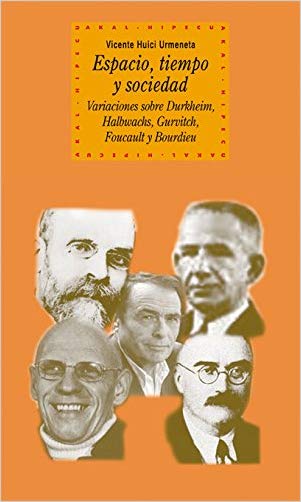 La cuestión de la naturaleza del espacio y el tiempo ha sido uno de los núcleos fundamentales de reflexión del pensamiento francés contemporáneo. En el mundo de la sociología, esta reflexión ha constituido una piedra angular, pues de su caracterización ha dependido todo el entramado teórico que, después, ha pretendido dar luz acerca de cuestiones tan trascendentales como la identidad colectiva o la percepción de los procesos sociales. Émile Durkheim y Marcel Mauss concibieron el espacio y el tiempo como representaciones colectivas elaboradas socialmente y transmitidas a través de la familia y la educación. Maurice Halbwachs intentó demostrar que había una duración social que podía manifestarse en un fenómeno tan relevante como la memoria colectiva. Georges Gurvitch distinguió un sinnúmero de dimensiones del tiempo social, reprochando a la Historia y a los historiadores sus pretensiones de subsumir los acontecimientos en una temporalidad plana. Michel Foucault abogó por la destrucción del tiempo y del espacio inculcados en la formación de los individuos y la contrapuso a la generación de una nueva matriz espacio-temporal, atribuible a un nuevo sujeto. Finalmente, Pierre Bourdieu, en sus investigaciones acerca del arte y de la cultura, ha puesto de manifiesto que las concepciones temporales y espaciales llevan implícito un mecanismo de distinción que implica una sistemática reordenación de los universos simbólicos.
LA TIERRA EN BLANCO: MÚSICA Y PENSAMIENTO A INICIOS DEL SIGLO XX (LISCIANI-PETRINI, ENRICA)
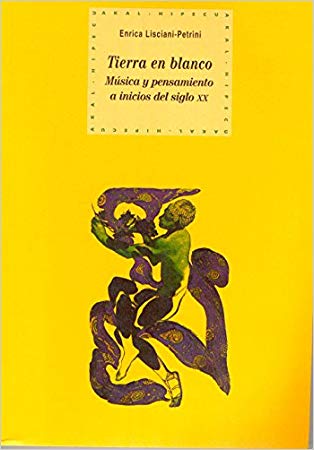 El libro traza un bosquejo de las relaciones entre música y pensamiento a principios del siglo centrándose en la obra de autores de la categoría de Debussy, Ravel, Stravinsky, Schönberg, Berg y Webern, sin descuidar la relación existente entre formas musicales y artes plásticas Klee y Kandinsky fundamentalmente. Se trata de un ensayo en profundidad sobre los contenidos filosóficos y estéticos de la música vanguardista de nuestro siglo.
FILOSOFÍA ANTIGUA POÉTICA (LÓPEZ PINCIANO, ALONSO)
LA ECONOMÍA POLÍTICA Y EL CRISTIANISMO (GONZÁLEZ Y DÍAZ TUÑÓN, CEFERINO)

THE JOURNAL OF PHILOSOPHY, PSYCHOLOGY AND SCIENTIFIC METHODS; VOLUME 2 (JSTOR)
 This work has been selected by scholars as being culturally important and is part of the knowledge base of civilization as we know it.This work is in the public domain in the United States of America, and possibly other nations. Within the United States, you may freely copy and distribute this work, as no entity (individual or corporate) has a copyright on the body of the work.Scholars believe, and we concur, that this work is important enough to be preserved, reproduced, and made generally available to the public. To ensure a quality reading experience, this work has been proofread and republished using a format that seamlessly blends the original graphical elements with text in an easy-to-read typeface.We appreciate your support of the preservation process, and thank you for being an important part of keeping this knowledge alive and relevant.
THE THEORY OF GOOD AND EVIL (RASHDALL, HASTINGS)
 This work has been selected by scholars as being culturally important and is part of the knowledge base of civilization as we know it.This work is in the public domain in the United States of America, and possibly other nations. Within the United States, you may freely copy and distribute this work, as no entity (individual or corporate) has a copyright on the body of the work.Scholars believe, and we concur, that this work is important enough to be preserved, reproduced, and made generally available to the public. To ensure a quality reading experience, this work has been proofread and republished using a format that seamlessly blends the original graphical elements with text in an easy-to-read typeface.We appreciate your support of the preservation process, and thank you for being an important part of keeping this knowledge alive and relevant.
INTRODUCCIONS A LA DOCTRINA DE LA CIÈNCIA (FICHTE, JOHANN G.)
 El tipus de filosofia que un escull depèn del tipus d?home que és, ja que un sistema filosòfic no és un atuell mort que es pugui agafar o deixar al nostre albir, sinò que està animat per l?ànima de l?home que el posseeix. Un caràcter retorçat, feble per natura o afeblit per l?esperit servil, el luxe refinat o la vaniitat no s?elevarà mai a l?idealisme.
LLUMS I OMBRES DE LA CIUTAT (DUCH ÁLVAREZ, LLUÍS)
 Aproximació antropològica a lésser humà com a ciutadà. El sentit que posseeixen actualment lespai i el temps humans (o inhumans) a la ciutat com a forma concreta (a vegades, clarament deshumanitzadora) de formalitzar-los i de viurels. Lautor ofereix diverses anàlisis de la ciutat com a expressió de la disposició cultural de lhome, que viu en un espai i un temps concrets i profundament marcats per lambigüitat.
THE MODERN PREVAILING NOTIONS RESPECTING THAT FREEDOM OF WILL (EDWARDS, JONATHAN)
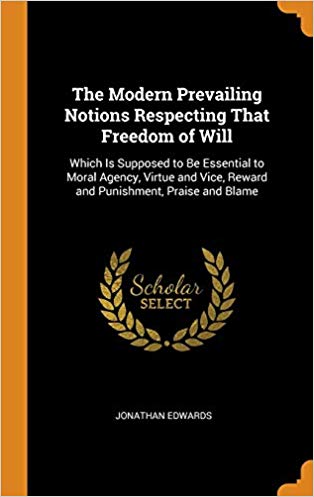 This work has been selected by scholars as being culturally important and is part of the knowledge base of civilization as we know it.This work is in the public domain in the United States of America, and possibly other nations. Within the United States, you may freely copy and distribute this work, as no entity (individual or corporate) has a copyright on the body of the work.Scholars believe, and we concur, that this work is important enough to be preserved, reproduced, and made generally available to the public. To ensure a quality reading experience, this work has been proofread and republished using a format that seamlessly blends the original graphical elements with text in an easy-to-read typeface.We appreciate your support of the preservation process, and thank you for being an important part of keeping this knowledge alive and relevant.
VIDES I DOCTRINES DELS FILÒSOFS MÉS IL·LUSTRES, VOL. I (LLIBRE I) (DIÒGENES LAERCI)
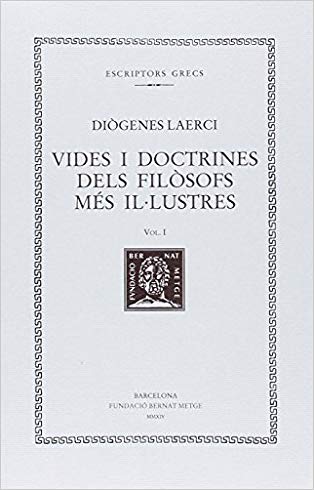 Per a qui vulgui saber què es deia a l'Antiguitat sobre les biografies de Tales, de Parmènides i d'Aristòtil, entre molts altres pensadors, les Vides i doctrines dels filòsofs més il·lustres són, sens dubte, l'obra de referència. El text de Diògenes Laerci, estructurat en deu llibres, es complau a explicar anècdotes, a recollir dades que si no fos per ell s'haurien perdut, a establir relacions entre els diversos filòsofs. Per la seva extensió, el seu grau de detall i la diversitat de la informació que transmet, és una obra singular en el panorama de la literatura antiga conservada. Amb aquesta publicació s'inicia l'edició catalana completa, bilingüe i anotada d'aquesta vasta obra, que ocuparà cinc volums en total. El llibre inclou una àmplia introducció de l'especialista Sergi Grau, que exposa la història del gènere biogràfic en l'Antiguitat i els misteris que envolten el text de Diògenes Laerci. A més, la seva traducció és la primera que té en compte la gran edició recent del filòleg Tiziano Dorandi, que presenta notables millores respecte de les edicions anteriors. Per totes aquestes raons, el volum és una eina indispensable per a l'historiador de la filosofia, a més de constituir una font de delectança per a qualsevol lector interessat en les vides dels pensadors grecs.