WORDSTAR, TRUCOS Y RECURSOS (ARCA, JULIE ANNE)


PROGRAMACIÓN ORIENTADA A OBJETOS CON CLIPPER 5.01 (MORERO PEYRONA, FRANCISCO J.)

ADOBE PHOTOSHOP 6. CAJA SOLUCIONES PROFESIONALES (AA.VV.)

SOLUCIONES PRÁCTICAS PARA OFFICE 97 ([GONZÁLEZ, NURIA)

INFORMÁTICA PARA OPOSICIONES

INTRODUCCIÓN AL BASIC M S X (KUCZORA, P. / KING, CH.)

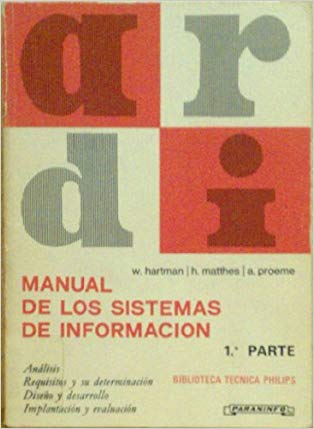
SISTEMAS INFORMACION 1 (HARTMAN, W. …)
KONPUTAGAILUEN ARKITEKTURA. HURBILKETA KUANTITATIBO BAT (HENNESSY, JOHN L. / PATTERSON, DAVID A.)
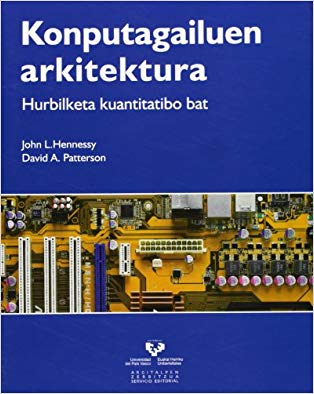 Edizio honi esker, konputagailuen arkitekturari buruz gehien saldu den liburuak arloa birdefinitzen du, nukleo bakarreko prozesadoreetatik nukleo anitzekoetara egin den aldaketa historikoa azalduz. Konputagailuen diseinua ulertzeko horrenbeste arrakasta izan duen hurbilketa kuantitatiboa erabiliz, Hennessy eta Pattersonek paralelismoa ustiatzeko teknika asko azaltzen dituzte, hori baita prozesadore anitzeko arkitekturen gaitasun osoaz baliatzeko gakoa. Prozesadore anitzen inguruko gaietan oinarritzen diren arren, prozesadoreen errendimenduaz harantzago dauden gaiak ere jorratzen dituzte, besteak beste, fidakortasuna, eskuragarritasuna eta konfiantza-maila. Azken mendean kostuari eta errendimenduari dagokienez egin diren hobekuntzekin jarraitzeko etengabeko berrikuntzak beharko dira; berrikuntza horiek, neurri handi batean, liburu klasiko honetan jorratzen diren funtsezko tekniketan oinarrituko dira.
FORTRAN I V CON WATFOR Y WATFIV (CRESS, PAUL … [ET AL.])

GUÍA VISUAL WINDOWS 98 (COLMENA ASENSIO, MANUEL)
 Esta guía visual va dirigida a quienes desean comenzar con Windows 98 sin tener previo conocimiento sobre el tema. Desde cómo adaptar Windows 98 a las necesidades y preferencias de cada uno hasta cómo conectar con Internet o hacer una página Web. A pesar del carácter práctico de esta obra no se excluye totalmente la teoría, puesto que cada una de las secciones que la componen introduce aquellos conceptos teóricos de mayor relevancia necesarios para tener una visión más sólida de este sistema operativo.
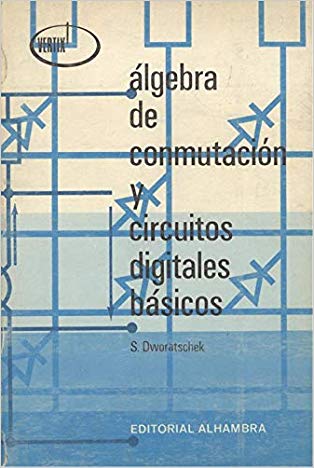
ÁLGEBRA DE CONMUTACIÓN Y CIRCUITOS DIGITALES BÁSICOS (DWORATSCHEK, SEBASTIAN)
NUEVAS TECNOLOGÍAS. GLOSARIOS 1 (VV.AA.)

GUÍA DE OFFICE 2000 PARA UNIVERSITARIOS (LUNA HUERTAS, PAULA / FERNÁNDEZ CARRIÓN, RODRIGO / ARRABAL PARRILLA, JUAN JOSÉ)
ESTRUCTURAS DE DATOS I (ALONSO DE LA HUERTA, JOSÉ ANTONIO/ARGUDO ARGUDO, JOSÉ FIDEL/GARCÍA HORCAJADAS, MARÍA TERESA)

COMPUTER SYSTEMS. AN INTRODUCTION TO COMPUTERS FOR ENGINEERING CURRICULA (VILA CARBÓ, JUAN A.)
 This book presents the contents of an introduction course to Computer Science for engineering disciplines where the engineer makes use of the computer not only as an "office tool" but also as an integral part of his designs. This is the case of the curricula in Industrial Automation, Telecommunication, or Aeronautics, where some engineering designs really consist of embedded systems built around a microcontroller. In all these curricula, the engineer needs a deeper insight on the computer basics that goes beyond the classical introduction to programming, which is considered to be complementary to this book. This book introduces the basics of computer structure and organization. The topics covered by the book are Information Coding, Digital Systems, Computer Organization, Machine Language, and the Computer Input/Output. The approach followed to introduce all these topics is the use of Systems Theory and abstraction as a way to deal with complexity: a strong emphasis is put throughout the book in identifying boxes with a well-defined functionality and a set of inputs and outputs. Complex objects, as computers, can be usually decomposed into a set of simpler components interconnected through their inputs and outputs. These components define a lower level of abstraction that allows showing up some implementation details that were not relevant at higher levels of abstraction.