INVITACIÓN A LA BIOLOGÍA (CURTIS, HELENA / BARNES, SUE N. / SCHNEK, ADRIANA / MARGALEF, RAMÓN)

CUADERNOS DE BIOESTADÍSTICA I (FERRANDIS BALLESTER, EDUARDO)

LOS LÍMITES DE LA MANIPULACIÓN GENÉTICA (NOSSAL, G.J.V.)
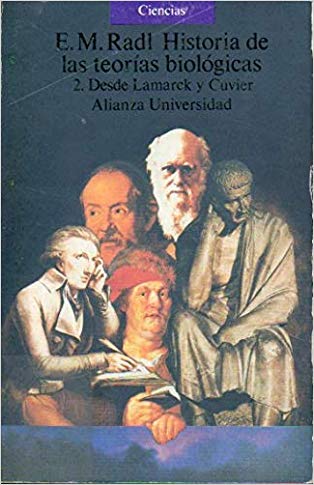
HISTORIA DE LAS TEORÍAS BIOLÓGICAS. (RADL, E. M.)
QUÍMICA Y FUNCIÓN DE LAS PROTEÍNAS (HAUROWITZ, FÉLIX)

YEAST BIOTECHNOLOGY (WILLAERT, RONNIE G)
 Yeasts are truly fascinating microorganisms. Due to their diverse and dynamic activities, they have been used for the production of many interesting products, such as beer, wine, bread, biofuels, and biopharmaceuticals. Saccharomyces cerevisiae (brewers? or bakers? yeast) is the yeast species that is surely the most exploited by man. Saccharomyces is a top choice organism for industrial applications, although its use for producing beer dates back to at least the 6th millennium BC. Bakers? yeast has been a cornerstone of modern biotechnology, enabling the development of efficient production processes. Today, diverse yeast species are explored for industrial applications. This Special Issue is focused on some recent developments of yeast biotechnology, i.e., bioethanol, wine and beer, and enzyme production. Additionally, the new field of yeast nanobiotechnology is introduced and reviewed.
EN BUSCA DE LA INMORTALIDAD . UNA APROXIMACIÓN AL DEBATE ACTUAL SOBRE LAS CÉLULAS MADRE (PEDROSA ELBAL, ALFONSO)

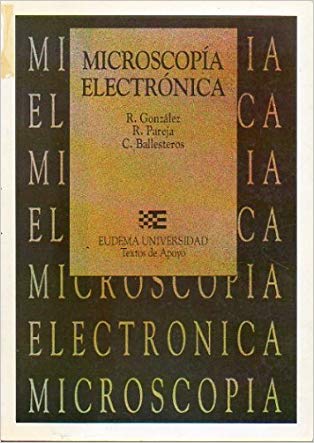
MICROSCOPIA ELECTRÓNICA (GONZÁLEZ AMADO, ROBERTO … [ET AL.])
MÁS DE 777 PREGUNTAS DE BIOESTADÍSTICA Y SUS RESPUESTAS (CAMPOS ARANDA, MATILDE)

ALIMENTACIÓN, BASE DE LA BIOLOGÍA EVOLUCIONISTA, LA (CORDÓN, FAUSTINO)

SELECTIVIDAD, BIOLOGÍA. RELACIÓN DE PRUEBAS DE ACCESO A LA UNIVERSIDAD. BIBLIOTECA DEL PROFESORADO

RECENT PROGRESS IN UNDERSTANDING THE MECHANISM AND CONSEQUENCES OF RETROTRANSPOS (GARFINKEL, DAVID J.;PURZYCKA, KATARZYNA J.)
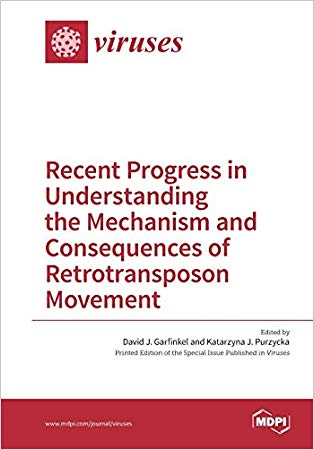 Retrotransposons are present in essentially all eukaryotic genomes and come in two basic flavors: those that are bracketed by long terminal repeats (LTRs) and share a common ancestor with retroviruses, and non-LTR retrotransposons that have a distinct lineage and remain transpositionally active in humans. Both types of retrotransposons replicate through an RNA intermediate, stably integrate into the host genome and have accumulated to a very high copy number in mammals and certain plant species. Autonomous elements produce transcripts capable of undergoing reverse transcription, and minimally encode proteins with reverse transcriptase, integrase/endonucleolytic, and nucleic acid chaperone activities. Retrotransposons are currently distinguished from viruses, since the process of retrotransposition is not infectious. However, this boundary may prove to be provisional as we learn more about these mobile genetic elements. The goal of this Special Issue of Viruses is to highlight progress in understanding the mechanism and consequences of retrotransposon movement. Several active research areas may be covered in
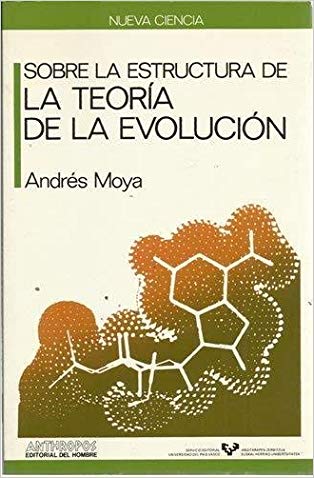
SOBRE LA ESTRUCTURA DE LA TEORÍA DE LA EVOLUCIÓN (MOYA, ANDRÉS)
PROBLEMES CLAU DE DISSENY D’EXPERIMENTS (ARENAS SOLA, CONCEPCIÓN)
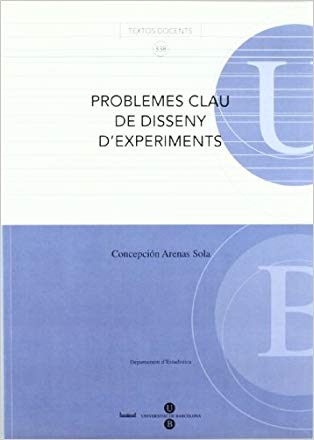 El text «Problemes clau de disseny d?experiments», dirigit als estudiants de Biologia, va néixer dins de les iniciatives per a la millora de la qualitat de l?ensenyament. El text conté problemes resolts fruit de l?experiència docent en aquesta matèria i els quals estan concebuts perquè es pugui comprovar el nivell actual de l?alumne i superar, si cal, les mancances que s?hi detectin. Els problemes que es presenten són tant teòrics com aplicats i alguns contenen llistats d?ordinador obtinguts amb el paquet estadístic Statgraphics. Espero que aquesta publicació sigui útil als estudiants en la seva formació com a persones i com a futurs professionals.
