LA CONSTITUCIÓN ECONÓMICA ESPAÑOLA..

HISTORY OF THE MODERN BRITISH ISLES, 1914 – 1999, A

PERRO MUERTO EN TINTORERÍA: LOS FUERTES
TOPONIMIAS Y ANTROPONIMIAS DE TELDE. DISTRITO I: SAN JUAN Y

THE GLOBAL SOUTH
PROYECTO Y VIVIENDA
UN CUENTO OSCURO
SOPAS FRÍAS Y CALIENTES
 Erika Medina y Pablo Jiménez son dos jóvenes cocineros formados en restaurantes del grupo Martín Berasategui. Ellos, a través de este libro, reivindican la cocina de cuchara y, más concretamente, las sopas. Erika nos explicará recetas de sopas calientes desde las tradicionales como la castellana, el caldo gallego, la porrusalda o diferentes tipos de sopas de pescado hasta unas sopas cremosas más creativas. Por el otro lado, el andaluz Pablo Jiménez nos hablará de las sopas frías tradicionales como el gazpacho o la porra antequerana, caseras como la del gazpacho de cerezas o la vichysoisse y sopas creativas de nuevo cuño como las sopas frías de melón o de piñones.
LE SABOTEUR

DÉJALO SER : CUENTOS
 Con la mirada escéptica, aguda y experimentada de un observador externo que es al mismo tiempo actor comprometido con la sociedad urbana, el autor logra reconstruir ambientes memorables y entregarnos cuentos cuya excelente manufactura literaria nos permite apreciar que las redes de las relaciones humanas contemporáneas son mejor aprehendidas por la literatura que por la sociología.
MAPA KENYA – KENIA 1:1000000

ON ADAM SMITH’S WEALTH OF NATIONS
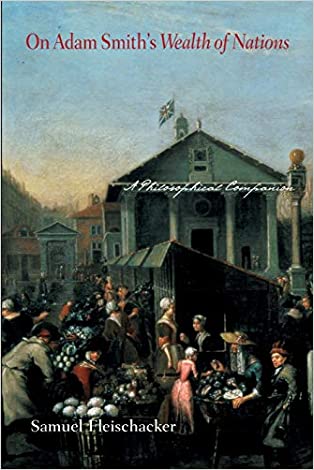 Adam Smith was a philosopher before he ever wrote about economics, yet until now there has never been a philosophical commentary on the Wealth of Nations. Samuel Fleischacker suggests that Smith's vastly influential treatise on economics can be better understood if placed in the light of his epistemology, philosophy of science, and moral theory. He lays out the relevance of these aspects of Smith's thought to specific themes in the Wealth of Nations, arguing, among other things, that Smith regards social science as an extension of common sense rather than as a discipline to be approached mathematically, that he has moral as well as pragmatic reasons for approving of capitalism, and that he has an unusually strong belief in human equality that leads him to anticipate, if not quite endorse, the modern doctrine of distributive justice. Fleischacker also places Smith's views in relation to the work of his contemporaries, especially his teacher Francis Hutcheson and friend David Hume, and draws out consequences of Smith's thought for present-day political and philosophical debates. The Companion is divided into five general sections, which can be read independently of one another. It contains an index that points to commentary on specific passages in Wealth of Nations. Written in an approachable style befitting Smith's own clear yet finely honed rhetoric, it is intended for professional philosophers and political economists as well as those coming to Smith for the first time.
NUEVOS YACIMIENTOS

TODOS LOS PERROS AÚLLAN
 Miguel Carcasona (Sangarrén, 1965) es autor del poemario En el arcén de la costumbre (1998), y del libro de relatos Esquirlas del espejo (2006). El resto de su obra se halla esparcido en volúmenes colectivos, revistas, prensa o Internet. Ha recibido numerosos premios, entre los que destacan el Ciudad de Cádiz o el Santa Isabel de Portugal, este último en sus dos modalidades (narrativa y poesía).