VIGO

EUSKAL HERRIKO SOINU-TRESNAK (BELTRAN ARGIÑENA, JUAN MARI)
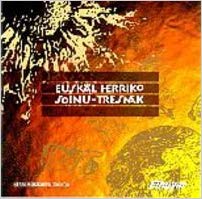
LA MÚSICA EN 100 PREGUNTAS (ESCAVIAS VACAS, JORGE)
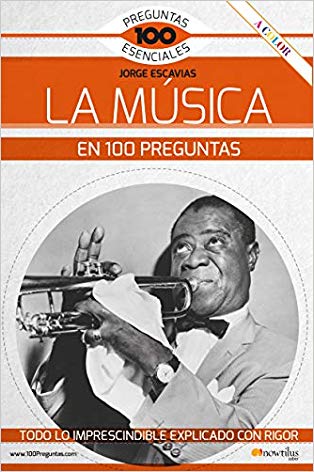 Los principios básicos del arte de la melodía, armonía y ritmo: la naturaleza de la música, elementos constitutivos, formas musicales, tipos y usos de la música, etnomusicología, lenguaje musical, organología, agrupaciones musicales, pasado, presente y futuro de la música. Una introducción clara, rigurosa y multidisciplinar para entender el mundo de la creación musical. ¿Shakira y Mozart tienen algo en común? ¿El Canon de Pachelbel es realmente un canon? ¿Qué tienen en común una sinfonía, un concierto para clarinete, un cuarteto de cuerda y una sonata para piano? ¿Son lo mismo la música popular, folk, étnica? ¿Le queda algo de latino a lo que consideramos música latina? ¿Cómo era la música en América antes de la colonización europea? ¿Qué secreto encierra un violín Stradivarius? ¿Orquesta sinfónica y filarmónica son lo mismo? ¿Cómo de grande es una big band? ¿Bach y The Beatles comparten algo? ¿Wagner y Brahms eran realmente enemigos? ¿Cómo surge el término rock and roll? ¿Cómo ha influido el desarrollo de la informática en la música? ¿Cuál es el futuro de la música?
LOS CIEN ÁLBUMES MAS VENDIDOS DE LOS AÑOS 90 (AUTY, DAN)
 Una recopilación de los 100 álbumes más vendidos de la década de 1990 en base a figuras de la industria discográfica. Cada álbum aparece con su respectiva carátula. Lista completa de canciones, integrantes y colaboradores y créditos de producción.
LOS CIEN ÁLBUMES MAS VENDIDOS DE LOS AÑOS 70 (CHAMP, HAMISH)
 Una recopilación de los 100 álbumes más vendidos de la década de 1970 en base a figuras de la industria discográfica. Cada álbum aparece con su respectiva carátula. Lista completa de canciones, integrantes y colaboradores y créditos de producción.
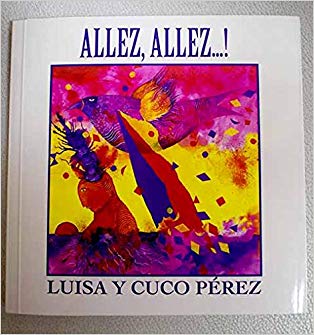
ALLEZ, ALLEZ..! . CANCIONERO POPULAR DE LOS REFUGIADOS ESPAÑOLES EN LOS CAMPOS DE CONCENTRACIÓN FRANCESES 1939-1942 (PÉREZ DE LA CRUZ, JESÚS)
DA CAMERA 2 . PER A FLAUTA I CLARINET (BONET, NARCÍS / BROTONS, SALVADOR / GUZMÁN, JOSEP LLUÍS)
 11 piezas para clarinetes en si b y flautas traveseras: - 2 dúos para clarinetes: Divertimento, Contraste. - 2 dúos para flautas: n. 3, n. 4. - 4 dúos para flauta y clarinete: n. 5, n. 6, n. 7. y n. 8. - 3 tríos para flautas y clarinetes: Trío, Canon, Lamento.
GOSPEL BELLS (BISCHOFF, JOHN W.)
 This work has been selected by scholars as being culturally important and is part of the knowledge base of civilization as we know it.This work is in the public domain in the United States of America, and possibly other nations. Within the United States, you may freely copy and distribute this work, as no entity (individual or corporate) has a copyright on the body of the work.Scholars believe, and we concur, that this work is important enough to be preserved, reproduced, and made generally available to the public. To ensure a quality reading experience, this work has been proofread and republished using a format that seamlessly blends the original graphical elements with text in an easy-to-read typeface.We appreciate your support of the preservation process, and thank you for being an important part of keeping this knowledge alive and relevant.
FIVE THOUSAND MUSICAL TERMS (ADAMS, JOHN STOWELL)
 This work has been selected by scholars as being culturally important and is part of the knowledge base of civilization as we know it.This work is in the public domain in the United States of America, and possibly other nations. Within the United States, you may freely copy and distribute this work, as no entity (individual or corporate) has a copyright on the body of the work.Scholars believe, and we concur, that this work is important enough to be preserved, reproduced, and made generally available to the public. To ensure a quality reading experience, this work has been proofread and republished using a format that seamlessly blends the original graphical elements with text in an easy-to-read typeface.We appreciate your support of the preservation process, and thank you for being an important part of keeping this knowledge alive and relevant.
THE SCOTTISH PSALTER (FREE CHURCH OF SCOTLAND. GENERAL ASSEMBL)
 This work has been selected by scholars as being culturally important and is part of the knowledge base of civilization as we know it.This work is in the public domain in the United States of America, and possibly other nations. Within the United States, you may freely copy and distribute this work, as no entity (individual or corporate) has a copyright on the body of the work.Scholars believe, and we concur, that this work is important enough to be preserved, reproduced, and made generally available to the public. To ensure a quality reading experience, this work has been proofread and republished using a format that seamlessly blends the original graphical elements with text in an easy-to-read typeface.We appreciate your support of the preservation process, and thank you for being an important part of keeping this knowledge alive and relevant.
L’INTÉGRAL DE BOB DYLAN. VOL. 003

LA MÚSICA CONTEMPORÁNEA A TRAVÉS DE LA OBRA DE JOSEP Mª MESTRES-QUADRENY (GASSER, LUIS)
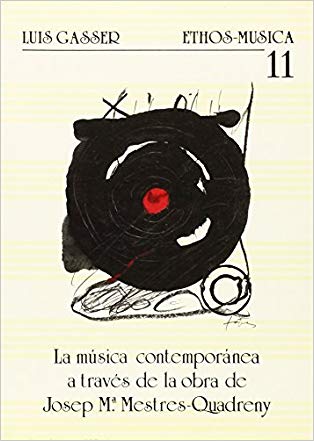 Este trabajo tiene un carácter fundamental técnico. Se van a dar datos que ayuden a establecer un sucinto panorama de la situación panorama de la situación en que se produce la música contemporánea, que pueda servir para enmarcar los posteriores análisis y comentarios.
LA MÚSICA CONTEMPORÁNEA EN ESPAÑA (SALAZAR, ADOLFO)
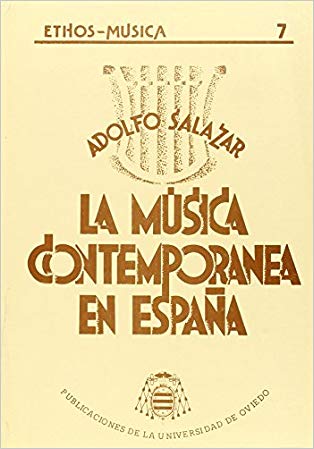 Este libro es en esencia expositivo y su principal propósito es mostrar, de la manera más coordinada posible, por qué caminos ha venido este instante actual tan floreciente en la música contemporánea española.
ADAMS’ NEW MUSICAL DICTIONARY OF FIFTEEN THOUSAND TECHNICAL WORDS, PHRASES, ABBR (ADAMS, JOHN STOWELL)
 This work has been selected by scholars as being culturally important and is part of the knowledge base of civilization as we know it.This work is in the public domain in the United States of America, and possibly other nations. Within the United States, you may freely copy and distribute this work, as no entity (individual or corporate) has a copyright on the body of the work.Scholars believe, and we concur, that this work is important enough to be preserved, reproduced, and made generally available to the public. To ensure a quality reading experience, this work has been proofread and republished using a format that seamlessly blends the original graphical elements with text in an easy-to-read typeface.We appreciate your support of the preservation process, and thank you for being an important part of keeping this knowledge alive and relevant.
CRÓNICA DEL TERRITORIO FLAMENCO EN LA ESPAÑA DE LA TRANSICIÓN (SALINAS, JOSÉ LUIS)
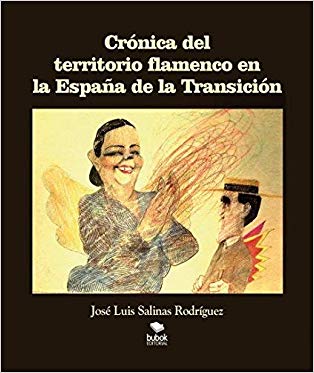 Esta crónica recorre el espacio geográfico y socio-cultural del flamenco durante los años de transición política en España; un período de profundos cambios en los hábitos colectivos. Para dar continuidad a la narración, la crónica se prolonga más allá de ese marco temporal, adoptándose el formato de unas memorias. Protagonistas principales de la historia son viejos cantaores, obligados practicantes del oficio de sobrevivir. Su testimonio, y el de otros informantes, conforman un argumentario vital con carácter de documento antropológico. El relato gravita sobre Jerez de la Frontera y su entorno, cuna del territorio flamenco, y se extiende a otras localidades, con mayor atención a los escenarios de Madrid y Barcelona, ciudades primordiales en la proyección del cante, del toque y del baile. La crónica se complementa con un ensayo en el que se analiza la importancia del mestizaje en el desarrollo del flamenco.