LITTLE LORD FAUNTLEROY (BURNETT, FRANCES HODGSON)
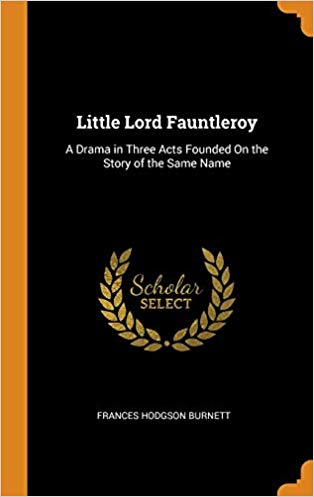 This work has been selected by scholars as being culturally important and is part of the knowledge base of civilization as we know it.This work is in the public domain in the United States of America, and possibly other nations. Within the United States, you may freely copy and distribute this work, as no entity (individual or corporate) has a copyright on the body of the work.Scholars believe, and we concur, that this work is important enough to be preserved, reproduced, and made generally available to the public. To ensure a quality reading experience, this work has been proofread and republished using a format that seamlessly blends the original graphical elements with text in an easy-to-read typeface.We appreciate your support of the preservation process, and thank you for being an important part of keeping this knowledge alive and relevant.
HE WHO GETS SLAPPED (ANDREYEV, LEONID)
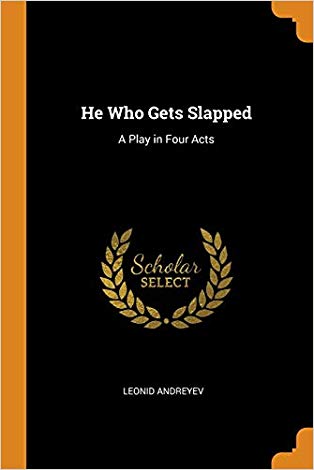 This work has been selected by scholars as being culturally important and is part of the knowledge base of civilization as we know it.This work is in the public domain in the United States of America, and possibly other nations. Within the United States, you may freely copy and distribute this work, as no entity (individual or corporate) has a copyright on the body of the work.Scholars believe, and we concur, that this work is important enough to be preserved, reproduced, and made generally available to the public. To ensure a quality reading experience, this work has been proofread and republished using a format that seamlessly blends the original graphical elements with text in an easy-to-read typeface.We appreciate your support of the preservation process, and thank you for being an important part of keeping this knowledge alive and relevant.
CLAVES LÍRICAS . VERSOS (DEL VALLE-INCLÁN, RAMÓN)

EL DESDÉN, CON EL DESDÉN ; EL LINDO DON DIEGO (MORETO, AGUSTÍN)
A NEW VARIORUM EDITION OF SHAKESPEARE (FURNESS, HORACE HOWARD/AMERICA, MODERN LANGUAGE ASSOCIATION OF)
 This work has been selected by scholars as being culturally important and is part of the knowledge base of civilization as we know it.This work is in the public domain in the United States of America, and possibly other nations. Within the United States, you may freely copy and distribute this work, as no entity (individual or corporate) has a copyright on the body of the work.Scholars believe, and we concur, that this work is important enough to be preserved, reproduced, and made generally available to the public. To ensure a quality reading experience, this work has been proofread and republished using a format that seamlessly blends the original graphical elements with text in an easy-to-read typeface.We appreciate your support of the preservation process, and thank you for being an important part of keeping this knowledge alive and relevant.
30A MOSTRA INTERNAIONAL DE MIM A SUECA . CELEBRADO DEL 18-22 SETIEMBRE DE 2019, SUECA (SERRA ROSELLÓ, OBDULIA / MAYORGA ANDRADE, YEVGENI)

TRES OBRAS DE TEATRO PARA REPRESENTAR EN LA ESCUELA 1-EL NIÑO QUE VINO DEL TRÓPICO 2_LA LLEGADA DEL TREN 3- EL SABIO METEORÍN (SEVILLA NOHALES, MARÍA CRISTINA)

HISTÒRIA SENTIMENTAL (AMORÓS CORBELLA, XAVIER)

LA COMEDIA VILLANESCA Y SU ESCENIFICACIÓN. (PEDRAZA JIMÉNEZ, FELIPE B./GONZÁLEZ CAÑAL, RAFAEL/MARCELLO, ELENA)
 ÍNDICE: Felipe B. Pedraza Jiménez: El extraño destino de las comedias villanesca, Programa. La Comedia villanesca en las tablas. - Emilio Hernández: Las villanas. - Ángel Facio: ¿La Fuenteovejuna que soñó Bakunin?. - José Luis Alonso de Santos. Peribáñez y el Comendador de Ocaña. - Juan Antonio Hormigón: Memoria de la Dama del Olivar. - Piedad Bolaños: Ayer y hoy: Una hipoteca puesta en escena de La serrana de la Vera. - Urszula Aszyk: Sobre la escenificación de Fuente Ovejuna en Cracovia, en 1948. - Fernando Pérez Ruano: La música en la comedia villanesca. La Comedia villanesca en los anaqueles. - José Maria Díez Borque: Villanas reivindicadas en le teatro de Lope de Vega. - Juan Matas Caballero: Variedad de registros y significación plural de lo villano en La Luna de la Sierra de Luis Vélez de Guevara. - Francisco Florit: La escenificación de lo popular-villanesco en el teatro de Tirso. - Sofía Eiroa: Los villanos fingidos en Tirso de Molina: técnicas dramáticas y su representación. - Nadine Laublé: Erotismo y cetrería en La ninfa del cielo de Tirso de Molina. - Roberto Castilla: Escenas de villanos en el teatro de Mira de Amescua. - Catalina Buezo: Hacia una tipología de villano y lo villano en el teatro áureo. - Juan Manuel Escudero: Los villanos: del rincón a la corte. - Rafael Ángel Sánchez Martínez: El villano visto por fuera en la comedia barroca española. Crónicas de los coloquios. - Fernando Doménech e Ignacio García Fernández: Coloquios sobre Los empeños del mentir de Antonio Hurtado de Mendoza, espectáculo de la RESAD. - Ángela Celis: Coloquio sobre El Alcalde de Zalamea. - Ángela Celis: Coloquio sobre Arlequín, servidor de dos patrones.