LA SITUACIÓ DEL CATALÀ AL PAÍS VALENCIÀ . DE VALÈNCIA AL CARXE I GUARDAMAR (MONTOYA ABAT, BRAULI)


LLENGUATGE CIENTIFIC I TÈCNIC (ASSOC. ENG. IND. DE CATALUNYA)

CIVILIZACIONES DE OCCIDENTE . CUADERNO DE TRABAJO (REYNAL, VICENTE)

ALGUNOS MOMENTOS DE EXPANSIÓN DE LA HISTORIA Y CULTURA VALENCIANAS (BATLLORI, MIGUEL)

ARQUEOLOGIA INDUSTRIAL . ACTES DEL CONGRÉS DEL PAÍS VALENCIA (CONGRES D’ARQUEOLOGIA INDUSTRIAL DEL PAIS VALENCIA (1.1990))
INTELIGENCIA APLICADA (RIBEIRO, DR. LAIR)
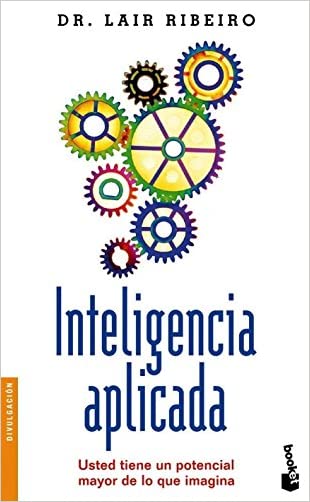 Un libro escrito para conseguir que el lector aumente el uso pragmático de su inteligencia y pueda incrementar positivamente su vida tanto en el aspecto personal como profesional. Texto, imágenes, actividades y citas hacen de la lectura de este libro un proceso ágil y dinámico en que el cerebro es estimulado para usar sus diversas áreas.
BORGHI E PARADISI DELLA LIGURIA, PIEMONTE, VALLE D?AOSTA, FRIULI-VENEZIA GIULIA, TRENTINO-ALTO ADIGE E VENETO

EL RENACIMIENTO EUROPEO (PETER BURKE)
ÁFRICA Y EGIPTO (VARIOS)

RAZÓN Y SOCIEDAD EN LA EDAD MEDIA (MURRAY, ALEXANDER)

LA CADENA DE VALOR EN LA TRANSFORMACIÓN DIGITAL (MOLINA ORDÓÑEZ, EMILIO)

DEEP MAPPING (ROBERTS, LES)
 In recent years there has been much discussion of the impacts of a ?spatial turn? in arts and humanities disciplines. The more far-reaching these impacts have become, the broader the scope of what a more ?spatially inflected? humanities might, and indeed does, look like. Yet, while the breadth of scholarship to which we can attach the provisional label ?spatial humanities? has, not surprisingly, foregrounded issues of space and place, questions of time and temporality equally underpin theoretical and practical interventions that are advancing research in this area. The idea of ?deep mapping?, which, as a term, has its origins in the writings of William Least Heat-Moon (but as an idea, ?deep mapping? has a much broader --and deeper --provenance), is one that finds resonance across spatial humanities research more generally. While not necessarily couched in such terms, deep mapping speaks to a rich profusion of perspectives that are, in some shape or form, engaged with the mapping or tapping of a layered and multifaceted sense of place, narrative, history, and memory. From qualitative GIS, to developments in l
VOLUME 5 (VARIOS)

CYBERBULLYING (MC GUCKIN, CONOR;CORCORAN, LUCIE)
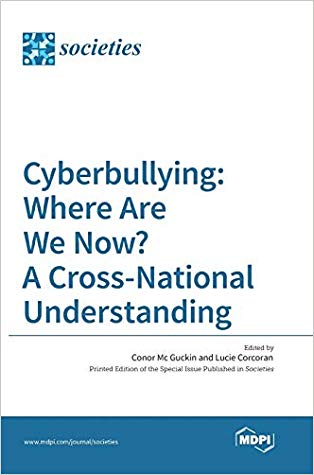 Cyberbullying has emerged as a major issue across societies and for schools, parents, children, and national governments (see Smith and Steffgen, 2013). Despite some similarities with traditional, or face-to-face (f2f) bullying (Mc Guckin, Cummins and Lewis, 2010), there is sufficient difference to warrant this contemporary and detailed examination of the issues related to cyberbullying?from a perspective that draws upon the most pertinent research and informed opinion from key researchers and thinkers from across the globe. The initial and pioneering knowledge about cyberbullying has now moved to a newer, more mature position that has been able to delineate the nuances associated with the issue, and importantly, yield robust insights for those involved in, or tasked to deal with, cyberbullying. ? This Special Issue brings together a collection of papers that represents the most up-to-date perspectives and evidence from across the globe. Collectively, these papers demonstrate how scholars and policy makers, from disparate disciplinary or stakeholder starting points, are progressing in their understanding o
