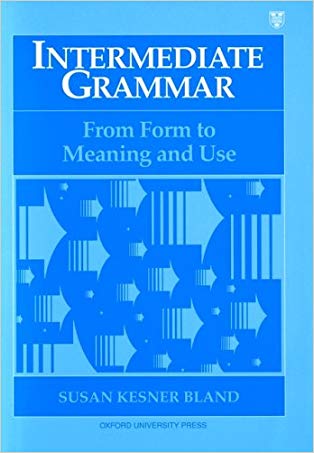
INTERMEDIATE GRAMMAR FROM FORM TO MEANING AND USE STUDENT’S BOOK (KESNER BLAND, SUSAN)

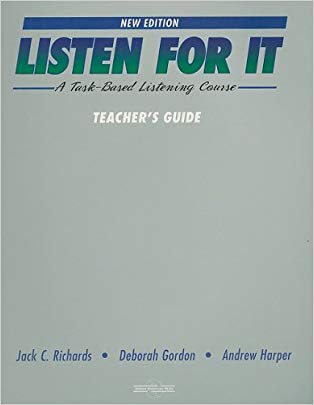
LISTEN FOR IT TEACHER’S BOOK NEW EDITION (RICHARDS, JACK C. / GORDON, DEBORAH / HARPER, ANDREW)
TEACHING LANGUAGE AS COMMUNICATION (WIDDOWSON, H.G.)
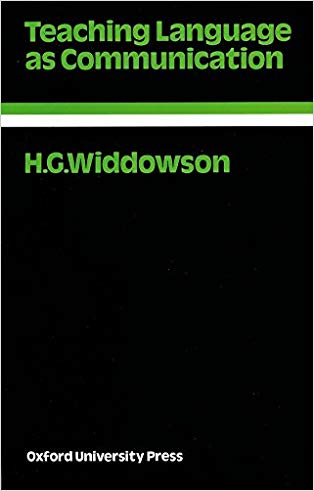 This book develops a rational approach to the teaching of language as communication, based on a careful consideration of the nature of language and of the language user's activities. It will stimulate all language teachers to investigate the ideas that inform their own practice.
OXFORD LEARNER’S WORDFINDER DICTIONARY (TRAPPES-LOMAX, HUGH)
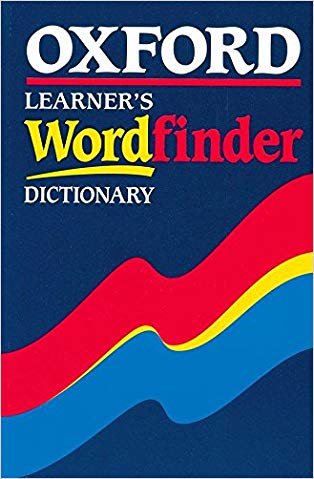 A resource book which starts from ideas and guides students to the words needed to express them.
SECOND LANGUAGE ACQUISITION (ELLIS, ROD)
 In the age of the global village and the world wide web, understanding the way in which people learn languages is of ever increasing importance. This book makes the essentials of this rapidly expanding area of study accessible to readers encountering it for the first time.
VERY YOUNG LEARNERS (WARD, SHEILA M. / REILLY, VANESSA)
TECHNIQUES AND RESOURCES IN TEACHING READING (SILBERSTEIN, SANDRA)
 This book answers both theoretical and practical questions on the teaching of reading. The author offers numerous suggestions on how to teach expository prose, non-prose reading, fiction, poetry and songs, as well as advice on how to help students discern opinion from fact. Textbook examples are complemented with a chapter on how teachers can develop their own materials.
GOOD NEWS BAD NEWS: TEACHER’S BOOK
TEACHING AMERICAN ENGLISH PRONUNCIATION (AVERY, PETER / EHRLICH, SUSAN)
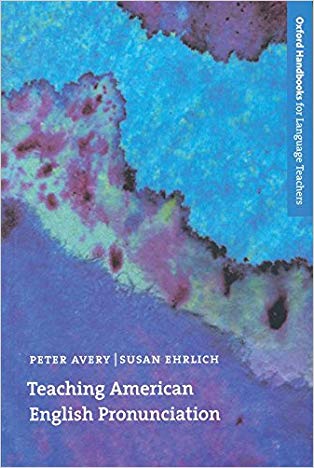 Unlike books aimed at linguistics students or individual learners of English, Teaching American English Pronunciation specifically addresses the needs of ESL teachers. It provides the descriptive knowledge needed to teach pronunciation effectively. But it is also full of practical teaching ideas. The book is divided into three main parts: - Part One is an introduction to the English sound system. It covers spelling and pronunciation, the individual sounds of English, English sounds in context, the shape of English words, word stress and vowel reduction, and connected speech. Throughout this part of the book, the authors use examples of typical errors made by ESL students to illustrate the descriptions and concepts they describe. - Part Two describes the pronunciation problems that most ESL students have with English vowels, consonants, stress, rhythm, and intonation. It then goes on to look at the specific pronunciation problems of speakers of fifteen different langua
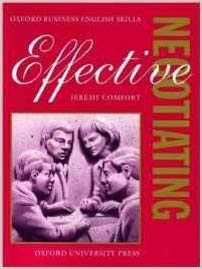
EFFECTIVE NEGOTIATIONS: STUDENT’S BOOK (COMFORT, JEREMY)
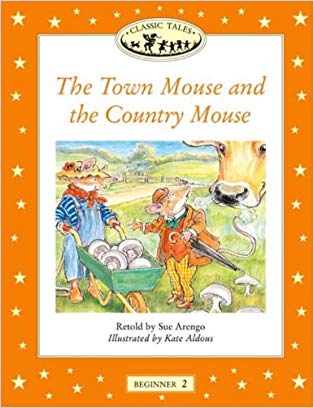
CLASSIC TALES BEGINNER 2. TOWN MOUSE
TECHNIQUES IN TEACHING VOCABULARY (FRENCH ALLEN, VIRGINIA)
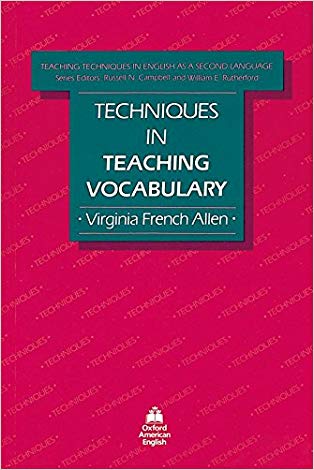 This book provides a sound basis for teaching vocabulary, and answers such questions as which English words students need to learn most, and why some words are easier to learn than others.
EXPLAINING ENGLISH GRAMMAR (YULE, GEORGE)
 Having to explain a grammar point can be daunting for teachers. The kinds of explanations that will help language students aren't always the ones you will find in a traditional, 'academic' grammar book or guide. Instead, Explaining English Grammar is a pedagogical guide, designed to help explain the 'whys' as well as the 'hows' of English grammar. The book is organized into ten chapters. Each chapter covers a specific grammar topic. After an introductory chapter, the topics covered are: - Articles - Tense and aspect - Modals - Conditionals - Prepositions and particles - Indirect objects - Infinitives and gerunds - Relative clauses - Direct and indirect speech This sequence is designed to cover the more basic topics first, and then to go into more complex areas. However, the chapters are also free-standing, so you can read them in any order - or leave some out - if you prefer. Each chapter has a similar structure. - First there is a section that desc