KOAD PROBLEMAK EBAZTEN TREBEGAI METODOA 5 LEHEN

KOAD PROBLEMAK EBAZTEN TREBEGAI METODOA 2 LEHEN
OXFORD SKILLS WORLD: READING & WRITING 2 (O’DELL, KATHRYN)
KOAD PROBLEMAK EBAZTEN TREBEGAI METODOA 6 LEHEN
NATURAL SCIENCE. 3 PRIMARY. MÁS SAVIA. PUPIL’S BOOK. MURCIA (EDICIONES SM)
 The MAS SAVIA Project for Natural Science takes advantage of different tools and methodologies to motivate the learning, understanding and application of the contents. The contents of each learning block are organized into three learning moments: Let's Get Started, Let's Understand and Let's use. Inserted between these are Make a Change (service-learning activities with many opportunities to work using co-operative strategies) in which both communicative and cognitive skills are put into practice. Many of the Let's Get Started and Let's Use sections take the form of experimental workshops. This general philosophy of promoting active learning is manifest in the final Making a Change task which integrates knowledge, skills and multiple intelligences. Natural Science takes the CLIL approach to making language and contents accessible with careful scaffolding of language and the visual summarizing of content. There are regular opportunities to review what has been learned. Attention to diversity is catered for by online testing which can give the teacher a clear and immediate evaluation of the class's performance by identifying students who may be having difficulties. Natural Science has been created in tandem with EPS: a new CLIL based English course for plurilingual primary schools which integrates closely with the Natural Science learning paths
NATURAL SCIENCE. 2 PRIMARY. MÁS SAVIA. MURCIA (GARÍN MUÑOZ, MERCEDES / CÁLIZ, SONIA / HIDALGO GARCÍA, JUAN MIGUEL)
 The MAS SAVIA Project for Natural Science takes advantage of different tools and methodologies to motivate the learning, understanding and application of the contents. The contents of each learning block are organized into three learning moments: Let's Get Started, Let's Understand and Let's use. Inserted between these are Make a Change (service-learning activities with many opportunities to work using co-operative strategies) in which both communicative and cognitive skills are put into practice. Many of the Let's Get Started and Let's Use sections take the form of experimental workshops. This general philosophy of promoting active learning is manifest in the final Making a Change task which integrates knowledge, skills and multiple intelligences. Natural Science takes the CLIL approach to making language and contents accessible with careful scaffolding of language and the visual summarizing of content. There are regular opportunities to review what has been learned. Attention to diversity is catered for by online testing which can give the teacher a clear and immediate evaluation of the class's performance by identifying students who may be having difficulties. Natural Science has been created in tandem with EPS: a new CLIL based English course for plurilingual primary schools which integrates closely with the Natural Science learning paths
CIENCIAS SOCIALES. 2 PRIMARIA. SAVIA. ANDALUCÍA (MENÉNDEZ CAMARENA, PILAR / HIDALGO GARCÍA, JUAN MIGUEL / MORATALLA DE LA HOZ, VICENTE)
 El proyecto SAVIA para Ciencias Sociales promueve la reflexión y el saber hacer a través de la contextualización de los contenidos y el aprendizaje visual.Los contenidos y las actividades contextualizadas, favorecen la reflexión y buscan el uso de todos los recursos al alcance del alumno. La ilustración comentada y los organizadores visuales ayudan a la comprensión y estudio de los conceptos. La cartografía se ha concebido teniendo en cuenta el nivel y los conocimientos propios de los alumnos de cada curso. Además, un diseño atractivo y visual que estimula el aprendizaje.Junto con el libro del alumno se incluye: El diario de Ismael, una revista que despertará la curiosidad de los alumnos y en la que descubrirán pueblos, ciudades, paisajes, edificios, fiestas... y muchas más cosas sorprendentes del mundo.
QUADERN MATEMATIQUES 1 PRIMARIA 2 TRIM SABER FER AMB TU
QUADERN MATEMATIQUES 1 PRIMARIA 3 TRIM SABER FER AMB TU
QUADERN MATEMATIQUES 1 PRIMARIA 1 TRIM SABER FER AMB TU
NEW THINK DO LEARN NATURAL SCIENCES 3. CLASS BOOK. MODULE 1. LIVING THINGS. (BLAIR, ALISON / CADWALLADER, JANE / CERVIÑO ORGE, IRIA)
AS VACACIÓNS DO NICOLASIÑO (GOSCINNY-SEMPÉ)
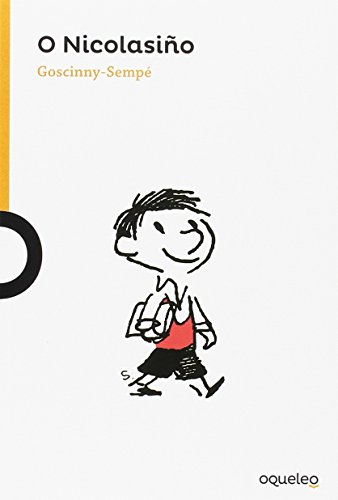
O NICOLASIÑO (GOSCINNY-SEMPÉ)
ENGLISH. MARAI AND WILLIAM. 3 PRIMARY. MÁS SAVIA (BEWICK, VICTORIA / DOHERTY, AMYJO / JORDAN , MARIANNE / PURCELL, ALEX / REDWOOD, SHAWN)
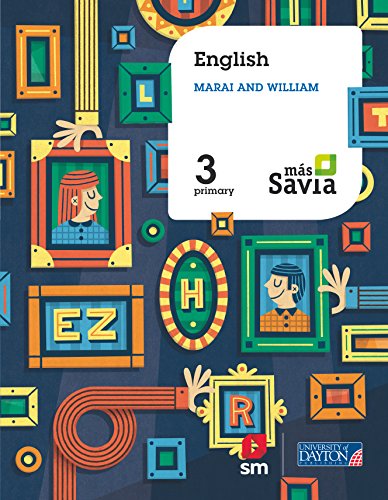 EPS for Primary is a dynamic CLIL based English course for plurilingual primary schools. It has been created in tandem with our Natural Science primary school course although it also contains shared contexts with Social Science, Music and Arts & Crafts. In this way EPS can complete an entire bilingual school primary education solution. Beginning with an entertaining comic strip the EPS units move from listening and speaking activities to reading and writing activities including the subtle acquisition of language structures through the Ninja Grammar sections. This helps to ensure that The EPS course is primarily communicative. Teachers also have access to over 90 optional grammar videos to reinforce work on language structures. The course includes its own phonics system developed especially for children whose first language is Spanish. Taking into account sounds found already in Spanish to sounds peculiar to English, the phonics element assures the smooth assimilation and practice of English pronunciation. For schools who have another preferred phonics system, the EPS system is modular and thus easy to skip. Videos open a window onto the culture of English speaking countries. EPS also prepares the pupils for the Cambridge English PET and KET exams with dedicated exam practice sections. It comes with complementary workbook and online resources.
NATURAL SCIENCE. 5 PRIMARY. MÁS SAVIA. PUPIL’S BOOK (EDICIONES SM)
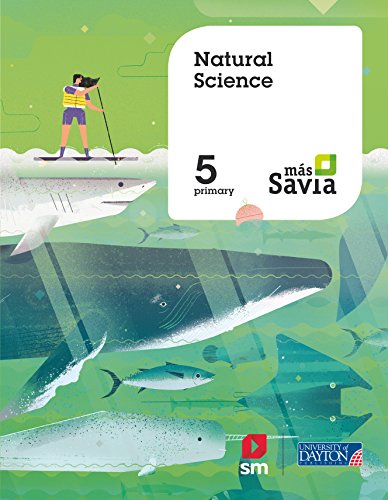 The MAS SAVIA Project for Natural Science takes advantage of different tools and methodologies to motivate the learning, understanding and application of the contents. The contents of each learning block are organized into three learning moments: Let's Get Started, Let's Understand and Let's use. Inserted between these are Make a Change (service-learning activities with many opportunities to work using co-operative strategies) in which both communicative and cognitive skills are put into practice. Many of the Let's Get Started and Let's Use sections take the form of experimental workshops. This general philosophy of promoting active learning is manifest in the final Making a Change task which integrates knowledge, skills and multiple intelligences. Natural Science takes the CLIL approach to making language and contents accessible with careful scaffolding of language and the visual summarizing of content. There are regular opportunities to review what has been learned. Attention to diversity is catered for by online testing which can give the teacher a clear and immediate evaluation of the class's performance by identifying students who may be having difficulties. Natural Science has been created in tandem with EPS: a new CLIL based English course for plurilingual primary schools which integrates closely with the Natural Science learning paths